

Why a Generator Permit in Columbus Matters
Yes, most permanent generator installations in Columbus need permits. A whole-home standby generator, transfer switch, new electrical wiring, or natural-gas or propane connection typically requires trade permits and city inspections. A portable generator used temporarily with extension cords is generally different because it is not permanently connected to your home.
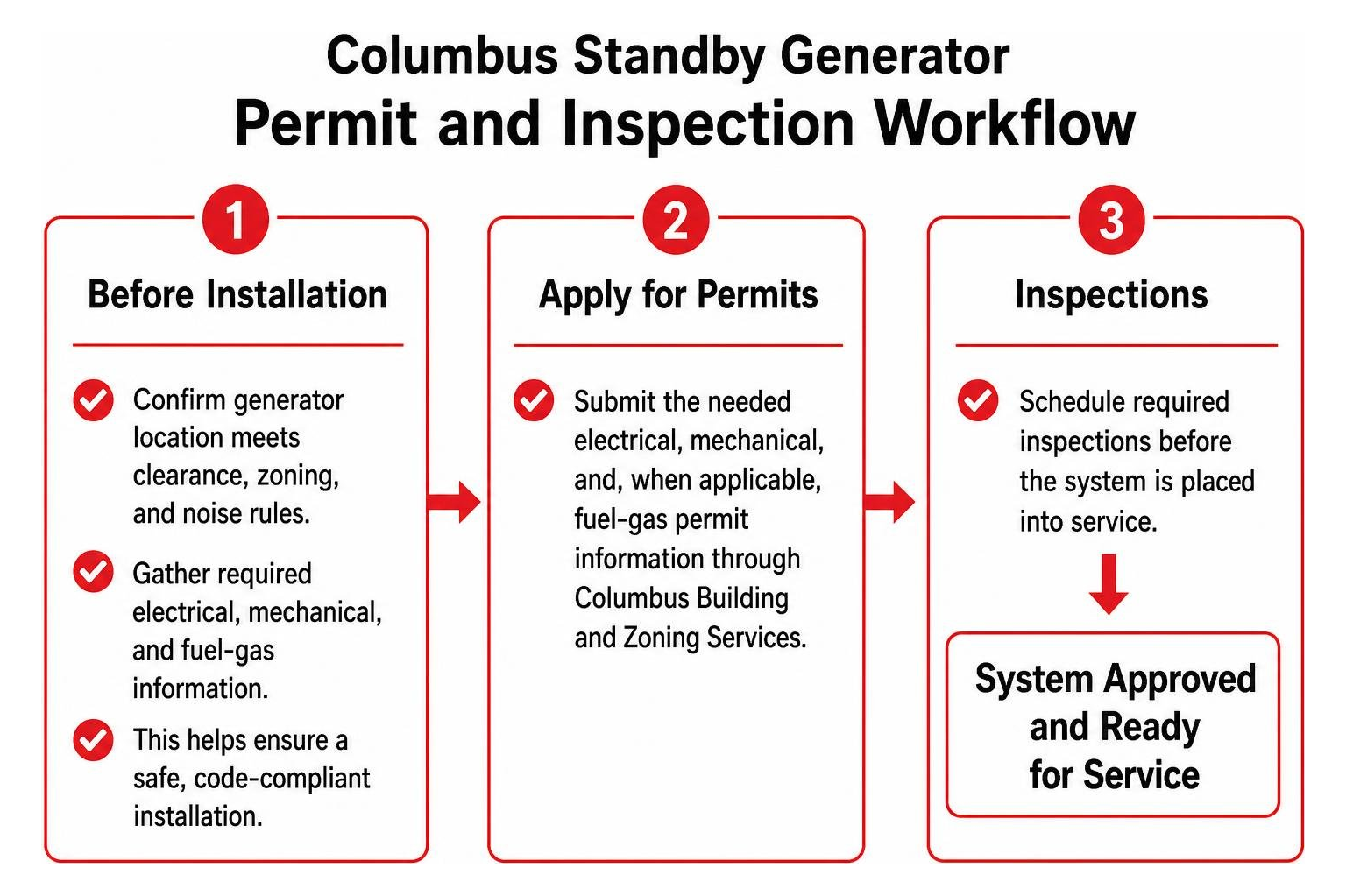
Before installation begins:
- Confirm the generator location meets clearance, zoning, and noise rules.
- Submit the needed electrical, mechanical, and, when applicable, fuel-gas permit information through Columbus Building and Zoning Services.
- Schedule required inspections before the system is placed into service.
The generator permit process in Columbus helps protect your family from unsafe wiring, exhaust hazards, improper fuel connections, and costly corrections after installation. It also creates a record that can matter during a home sale or insurance review.
Our team at Aire-Flo Heating, Cooling & Generators helps Central Ohio homeowners plan backup-power projects with safety, code compliance, and reliable operation in mind. Clear permit planning helps keep the installation ready for the next outage.
Do You Need a Permit to Install a Generator in Columbus?
Installing backup power involves serious electrical capacity, mechanical ventilation, and pressurized fuel supplies. Because of these factors, the City of Columbus requires official trade permits for permanent installations.
For a system that is designed, permitted, and connected correctly, professional generator installation helps make sure each connection follows the National Electrical Code and local building regulations.
Securing the proper paperwork is not just a formality; it helps your system operate safely without backfeeding the electrical grid or creating carbon monoxide hazards. A backfeeding generator poses a severe, life-threatening danger to utility workers restoring power after a storm. Municipal permitting and technical plan reviews confirm that an approved transfer device isolates your home’s circuits from the electrical grid.
| Generator Configuration | Permit Required? | Typical Permit Types Needed | Inspection Triggers |
|---|---|---|---|
| Portable (Direct Extension Cords) | No | None | N/A |
| Portable with Manual Transfer Switch | Yes | Electrical Permit | Electrical rough-in, final connection |
| Whole-Home Standby (Natural Gas) | Yes | Electrical and mechanical or fuel-gas permits | Trenching, gas pressure, electrical, final |
| Whole-Home Standby (Propane Tank) | Yes | Electrical, mechanical, and zoning clearance | Pad placement, tank clearance, electrical, final |
Installations That Require Permits and Common Exemptions
Any project that permanently integrates with your home’s electrical service panel or fuel infrastructure requires municipal review. If you add a manual transfer switch, an interlock kit, a whole-home automatic transfer switch, or extend your home’s natural gas piping, a permit is typically required. Requirements can vary by municipality, so confirm the rules for your address before work begins.
The primary exemption applies to portable generators operated strictly outdoors and plugged directly into individual appliances using heavy-duty, rated extension cords. Because this temporary setup does not alter your home’s structural wiring, utility meter, or fuel piping, it generally does not require a permit. Portable units still need careful outdoor placement away from open windows and doors.
Homeowner vs. Licensed Contractor Permit Applications
Under Columbus and Franklin County rules, homeowners may be able to pull owner-builder permits for a primary residence. However, doing so places the planning, documentation, and safety responsibilities on the homeowner. You may need to complete electrical load calculations, prepare compliant diagrams, pressure-test fuel lines, and meet on-site inspectors.
Working with a licensed, bonded contractor helps protect your property. Professional technicians understand local amendments, load calculations, and safety standards, which can help the work pass municipal review smoothly.
Step-by-Step Process for a Generator Permit Columbus Homeowners Must Follow
The City of Columbus Department of Building and Zoning Services (BZS) handles all trade permits. Applications can be submitted digitally or in person at the Michael B. Coleman Government Center on North Front Street. Navigating the municipal portal requires careful categorization of your mechanical and electrical work.

Required Documentation for a Generator Permit Columbus Application
To submit a complete application package, you or your contractor must gather several specific documents:
- A scaled site plan illustrating property lines, easements, utility meters, and distances to existing structures.
- Complete electrical schematics indicating panel sizing, transfer switch ratings, grounding layouts, and wire gauges.
- Fuel piping plans, including pipe diameter, run length, pressure ratings, and total British Thermal Unit (BTU) delivery demand.
- Manufacturer specification cut sheets for the generator unit, sound enclosure, and automatic transfer switch.
- Accurate whole-home electrical load calculations to prove the generator can handle active household circuits safely without overloading.
Scheduling and Passing Columbus Generator Inspections
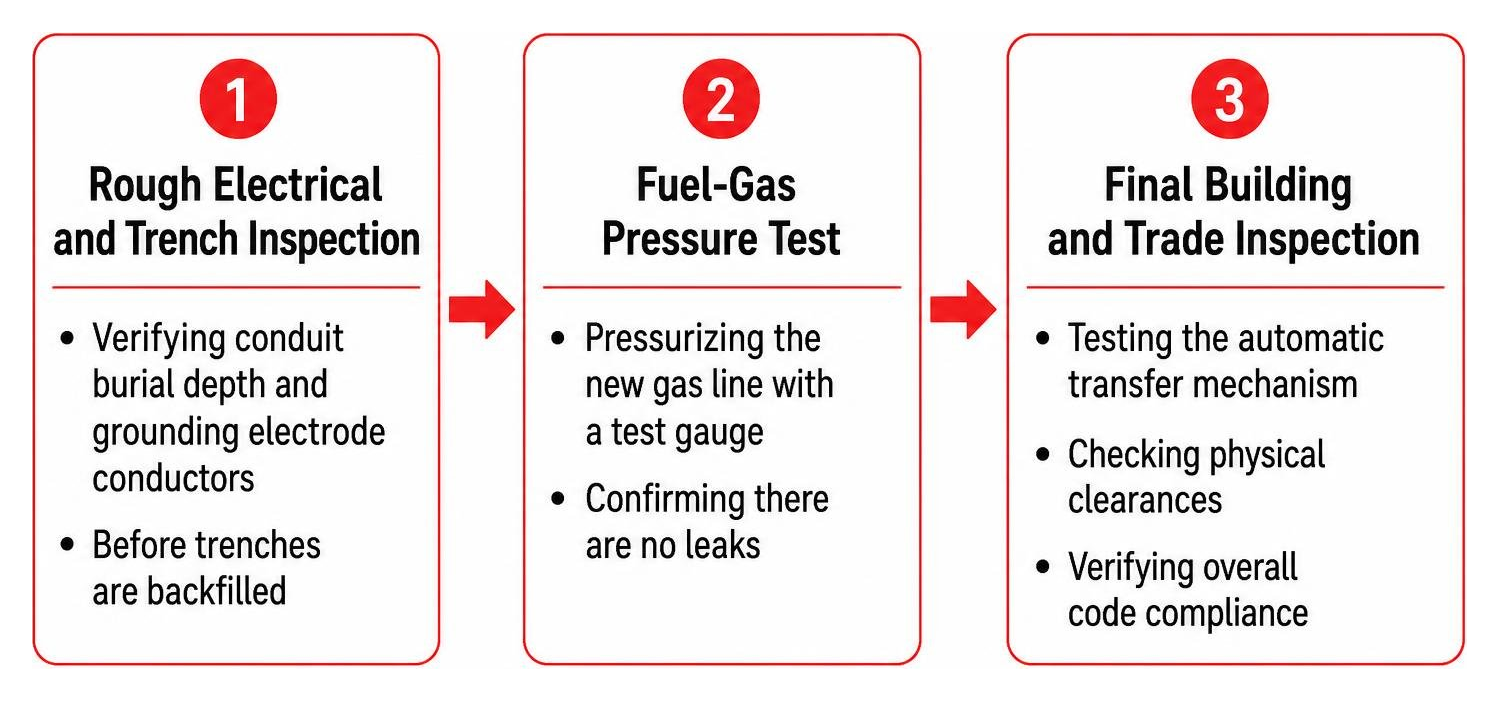
Once your application is approved and work is underway, municipal inspectors must verify the installation at key phases. These visits typically include:
- Rough Electrical and Trench Inspection: Verifying conduit burial depth, warning tape placement, and grounding electrode conductors before trenches are backfilled.
- Fuel-Gas Pressure Test: Pressurizing the new gas line with an approved test gauge to confirm there are no leaks before turning on utility service.
- Final Building and Trade Inspection: Testing the automatic transfer mechanism under simulated outage conditions, checking physical clearances, and verifying overall code compliance.
Siting Rules, Noise Ordinances, and Code Compliance
Placement is one of the most strictly regulated aspects of a residential generator installation. The National Fire Protection Association establishes strict standards under NFPA 37 regarding clearances from structures and openings.
Generators must maintain proper clearance from operable windows, exterior doors, vents, and combustible wall assemblies to prevent exhaust gases from entering the living space. In general, units must sit a minimum distance away from any window opening or door, while keeping clear space around the enclosure to ensure adequate airflow for engine cooling and servicing.
Local zoning rules also govern property setbacks, specifying how close an outdoor mechanical unit can sit relative to side and rear lot boundaries. Additionally, Columbus enforces residential noise ordinances. Selecting a modern, sound-attenuated unit helps keep operating sound levels within neighborhood decibel limits during routine weekly test cycles. Proper placement on an approved, level concrete or composite pad also prevents settling, vibration, and structural strain over years of operation.
Planning a Generator Installation in Columbus
A complete backup generator installation supports home resilience during severe weather and unexpected outages. The generator’s electrical capacity, the distance between the electrical meter and fuel supply, pad preparation, trenching, and service-panel needs can all affect the project scope.
Professional generator installation in Columbus can help homeowners evaluate the electrical load, equipment location, transfer switch, fuel connection, and permit steps before installation begins.
If you already have backup power, timely generator repair in Columbus can help identify issues with starting, transfer operation, or routine testing before an outage puts the system to the test.
For an older unit that needs significant work, our generator repair vs. replacement guide explains the practical signs that can help homeowners decide which path makes more sense.
Generator size, fuel type, electrical capacity, and installation conditions can all change the overall scope. Our guide to how home generator installations are planned explains the factors that shape equipment and installation decisions.
Permit Scope and Project Planning
City permit requirements depend on the specific electrical, mechanical, and fuel-gas work involved. Planning the site layout, load calculation, equipment specifications, and inspection sequence before work begins can help prevent delays and unexpected corrections.
A licensed contractor can coordinate the application details, inspections, and installation work so each part of the project aligns with local requirements.
Frequently Asked Questions About Generator Permits in Columbus
How long does it take to get a generator permit approved in Columbus?
Standard residential trade permits submitted with complete plans generally take about two weeks for municipal plan examiners to review. Minor Limited Scope applications or simple residential electrical filings can sometimes be processed more quickly if all technical specifications and licensing details are complete upon initial submission.
What happens if I install a generator without a permit in Columbus?
Installing unpermitted electrical or gas equipment can lead to official stop-work orders, municipal fines, and mandatory removal of non-compliant work. Furthermore, unpermitted installations can complicate future home sales during title inspections and may give insurance providers grounds to deny claims related to electrical fires or equipment failures.
Who handles generator permits in Columbus and how do I contact them?
The City of Columbus Department of Building and Zoning Services processes all generator trade permits. They are located at 111 N Front Street, Columbus, OH 43215, and can be reached via the city’s general customer service line or through the online Citizen Access Portal for application tracking and scheduling.
Conclusion: Ensuring a Safe, Compliant Generator Installation in Columbus
A professionally permitted backup power system can provide peace of mind during severe weather and unexpected grid outages. Careful electrical load calculations, fuel-line planning, and municipal paperwork help protect your investment and support safe, dependable operation.
When you are ready to evaluate your home’s backup-power needs, contact our professional generator technicians to schedule an on-site consultation.