

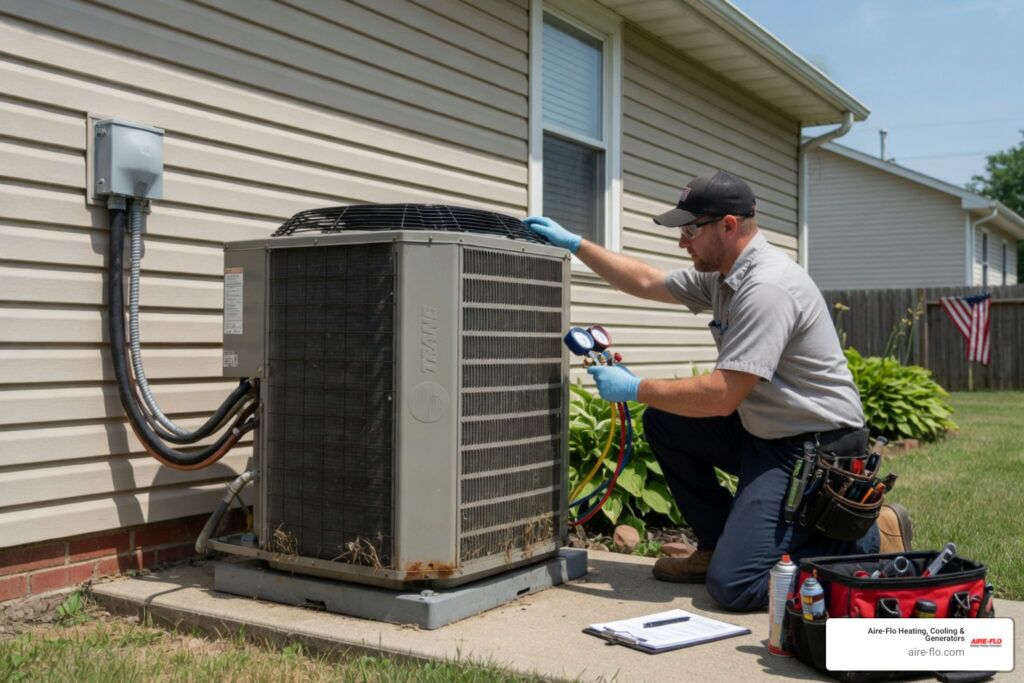
When Your AC Fails in Columbus, Here’s What You Need to Know
AC repair in Columbus, OH is one of the most urgent home service needs during a Central Ohio summer, when heat indexes can climb past 100°F and humidity makes every degree feel worse.
Quick answers for Columbus homeowners:
- AC not cooling? Check your thermostat, replace a dirty filter, and clear debris around the outdoor unit. If the problem continues, call a licensed technician.
- Common signs you need AC repair: warm air from vents, weak airflow, unusual noises, moisture around the unit, or a rising electric bill.
- Diagnostic visits: Costs vary by contractor, system type, and service timing. Ask what is included before scheduling.
- Best time to schedule maintenance: Late March through early May, before summer heat peaks.
- Rule of thumb on repair vs. replace: If your system is under 10 years old and the repair is minor, repair it. Over 10 years old with repeated problems? Start considering replacement.
- Emergency service: Many Columbus HVAC companies offer same-day or next-day service for complete system failures.
Columbus summers do not ease into the season. June heat arrives fast, and an air conditioner that was running fine in May can struggle badly by July. Humidity compounds the problem. When your system is working overtime to remove moisture from the air, small issues become big failures quickly.
At Aire-Flo Heating, Cooling & Generators, our team has spent decades helping Columbus homeowners navigate AC repair in Columbus, OH, through some of the region’s hottest, most humid summers. In the sections below, we’ll walk through what you need to know to protect your home, your comfort, and your cooling system this season.

How Columbus Weather Strains Your Cooling System
Central Ohio weather places immense stress on residential air conditioning systems. We experience rapid shifts from pleasant spring days to intense summer heat waves. These temperature swings force your cooling system to work harder than systems in milder climates.
When the summer heat rolls into Columbus, dew points regularly exceed 70 degrees. This high level of atmospheric moisture forces your air conditioner to act as both a cooling unit and a dehumidifier. If your system cannot handle this dual load, you will quickly notice comfort issues inside your home. To understand why this happens, you can read more about why your AC isn’t removing humidity.
This continuous heavy workload can lead to unexpected breakdowns in communities across the metro area. From historic homes to newer subdivisions, every neighborhood faces unique environmental challenges. For example, residents utilizing Columbus, OH AC Services often deal with high humidity levels that stress older systems.
Constant humidity leads to two major physical issues within your air conditioner: condensate drain clogs and evaporator coil corrosion. As the system pulls gallons of water from your indoor air, algae and debris can build up in the drain line. This buildup causes water to back up, which can damage your home and trigger safety switches that shut down your system completely. At the same time, moisture on the coils can lead to galvanic corrosion, creating microscopic pinhole leaks that allow refrigerant to escape.
The Impact of High Summer Humidity
When humidity levels climb in Central Ohio, your air conditioner must work double duty. The cooling process naturally removes moisture as warm air passes over the cold evaporator coil. However, when the air is exceptionally thick, the volume of water produced can overwhelm your system.
High humidity levels also increase the risk of mold growth inside your ductwork and drain pans. If your system does not drain this water away quickly, you may experience leaks. Homeowners can find practical advice on handling these issues in our guide on solving AC water leaks in Columbus.
Rapid Temperature Shifts and Component Wear
The quick transition from chilly spring nights to scorching summer afternoons forces your system to cycle on and off frequently. This rapid cycling places significant electrical stress on your system.
The electrical components, particularly the capacitors, bear the brunt of this seasonal transition. Capacitors store and release electrical energy to start the compressor and fan motors. Extreme heat causes these parts to degrade quickly, which can prevent your system from turning on when you need it most. You can learn more about how these seasonal shifts impact local systems by reading about what causes AC breakdowns in Delaware.
Common Signs You Need AC Repair Columbus OH
Recognizing the early warning signs of system decline can save you from an expensive emergency breakdown. Many major air conditioning issues start as minor performance changes that homeowners often overlook.
If you notice any of these signs, take action before the summer heat intensifies. You can explore a detailed checklist of warning signs in our article on how to beat the heat by identifying signs your air conditioner needs repair.
Weak Airflow and Warm Air
If you feel lukewarm air coming from your supply registers, or if the airflow feels much weaker than usual, your system is struggling. These symptoms usually point to a few specific issues.
Clogged air filters are the most common cause of restricted airflow. When a filter is packed with dust and pet dander, the blower motor must work much harder to pull air through the system. This extra work can cause the motor to overheat and fail. Regular AC Maintenance helps catch dirty filters, weak airflow, and early system strain before they turn into bigger repairs. Restricted airflow can also cause the evaporator coil to freeze, turning your air conditioner into a block of ice. If you are experiencing these issues, you can find solutions in our guide: Solving Common AC Issues in Columbus.
Why Delaying AC Repair Columbus OH During a Heatwave is Risky
It is tempting to ignore a slightly noisy unit or a minor cooling delay, but delaying necessary repairs during a heatwave is a major gamble. When outdoor temperatures climb, your system operates under peak pressure.
A minor issue, such as a failing capacitor or a small refrigerant leak, can quickly cascade into a total system breakdown. Operating a system with low refrigerant forces the compressor to run hotter and longer, which can lead to permanent compressor failure. The compressor is the most expensive component in your air conditioner, and replacing it is a major expense.
Delaying repairs also results in much higher utility bills. A struggling system runs longer cycles to meet your thermostat settings, consuming excess electricity without properly cooling your home. You can read more about preparing your system for peak demand in our resource, Is Your AC Truly Ready for Summer Signs You Need Air Conditioning Repair Now.
The Professional AC Diagnostic and Repair Process
When you schedule an appointment with our team, we follow a rigorous diagnostic process to find the root cause of your system’s issues. A professional technician does not simply look at the unit and guess. We use precise testing equipment to measure your system’s performance against manufacturer specifications.
Understanding what happens during a service visit can help you feel more comfortable with the process. We break down the details of a standard visit in our guide, What is Included in a Professional AC Repair Visit.
Step-by-Step System Diagnosis
A thorough diagnostic visit involves several key steps to ensure we check every critical component:
- Electrical Testing: We measure the amperage draw on your compressor, outdoor fan motor, and indoor blower motor. We also test the capacitance of your start and run capacitors.
- Refrigerant Evaluation: Using digital manifold gauges, we measure the operating pressures of your refrigerant circuit to ensure the system has the correct charge.
- Airflow Assessment: We measure static pressure within your ductwork to ensure proper airflow and test the temperature differential, which is the temperature split between the air entering your return vents and the air exiting your supply vents. A properly functioning system should maintain an 18 to 22 degree difference.
- Coil Inspection: We inspect both the indoor evaporator coil and the outdoor condenser coil for dirt, debris, or signs of corrosion.
What to Do Before the Technician Arrives
You can help the diagnostic process go smoothly by taking a few simple steps before our technician arrives at your home. First, ensure there is a clear path to both your indoor furnace or air handler and your outdoor condenser unit. Clearing away weeds, toys, or storage boxes gives the technician immediate access.
Next, check your thermostat batteries and make sure the settings are correct. If you have noticed any unusual sounds or smells, write down when they occur. This information can help our team locate the issue more quickly. For more tips on keeping your system accessible and clean, read about preventing AC coil issues.
Repair vs. Replace: Navigating System Age and Costs
Every homeowner eventually faces the difficult decision of whether to repair an aging air conditioner or invest in a new system. This decision involves looking at the age of the unit, the frequency of repairs, and long-term energy costs.
| Repair Scenario | Average Cost Range in Columbus | Recommendation |
|---|---|---|
| Thermostat Replacement | $150 to $350 | Repair |
| Run Capacitor Replacement | $120 to $250 | Repair |
| Condensate Pump Replacement | $150 to $300 | Repair |
| Blower Motor Replacement | $400 to $900 | Repair if unit is under 10 years old |
| Evaporator Coil Replacement | $1,000 to $2,500 | Consider replacement if unit is out of warranty |
| Compressor Replacement | $1,500 to $3,000 | Replace the entire system if unit is over 10 years old |
To evaluate your system’s current condition, review what affects AC lifespan, including age, maintenance history, repair frequency, and efficiency. If your unit is struggling to keep up or repairs are becoming more common, it may be time to consider whether replacement is the smarter long-term choice.
Evaluating the Age of Your AC Unit
The average lifespan of a central air conditioner in Columbus is 10 to 15 years. Once your system crosses the ten-year mark, you will likely see a decline in operating efficiency.
Older units also face challenges with refrigerant availability. Systems manufactured before 2010 often use R-22 refrigerant, which has been phased out due to environmental regulations. If an older system develops a leak, sourcing R-22 is incredibly expensive. In these cases, replacing the unit is almost always the more practical financial choice. You can find more information on this topic in our Freon Leak in Air Conditioning Unit Repair or Replace Guide.
Understanding Average Repair Costs in Columbus
Minor repairs such as replacing a capacitor, a contactor, or a thermostat are relatively inexpensive and can extend the life of a mid-aged system. However, major component failures require a closer look at your budget.
If a major repair cost exceeds 50% of the value of a new system, we generally recommend replacement. You should also check if your system is still covered under its original installation warranty. You can learn more about how warranties work in our guide, When Will a Manufacturer’s Warranty Cover Air Conditioning Repair.
Frequently Asked Questions About Columbus Cooling Systems
Keeping your home comfortable requires a basic understanding of how your cooling system interacts with our local climate. Here are some of the most common questions we hear from Columbus homeowners. You can also explore our article on Common AC Maintenance Problems for more troubleshooting tips.
How often should I schedule AC maintenance in Columbus?
We recommend scheduling professional maintenance once a year, preferably in early spring. Regular maintenance prevents unexpected breakdowns and helps your system run as efficiently as possible. You can learn more about the benefits of regular upkeep from the U.S. Department of Energy.
An unmaintained air conditioner can lose up to 5% of its operating efficiency every year. Additionally, dirty coils can reduce heat transfer efficiency by 20% to 30%. Routine maintenance improves efficiency by 5% to 15%. For a Columbus home averaging $180 per summer month in cooling costs, regular maintenance can mean $9 to $27 in monthly savings. You can read more about maximizing your system’s performance in our guide to AC Efficiency This Summer in Columbus.
What should I do if my AC stops cooling during a heatwave?
If your system stops cooling during a heatwave, do not panic. Start with a few basic troubleshooting steps:
- Check the Thermostat: Ensure it is set to “cool” and the temperature setting is below the current indoor temperature. Replace the batteries if the screen is blank.
- Inspect the Air Filter: A completely clogged filter can stop airflow and cause the system to shut down. Replace it if it is dirty.
- Check the Circuit Breaker: Look at your home’s main electrical panel to see if the breaker for the AC unit has tripped. If it has, reset it once. If it trips again immediately, do not try to reset it again; call a professional.
- Examine the Outdoor Unit: Ensure the outdoor condenser unit is free of leaves, grass clippings, and debris.
If these quick checks do not fix the problem, it is time to call a professional. For more context, see why AC systems often break down during summer heat.
How can I improve my AC efficiency to prevent repairs?
You can take several simple steps to reduce the workload on your air conditioner and prevent premature wear:
- Shade Your Outdoor Unit: Providing partial shade for your outdoor condenser can lower the surrounding air temperature, helping the unit release heat more easily.
- Use Ceiling Fans: Running ceiling fans creates a wind-chill effect that makes rooms feel cooler, allowing you to raise your thermostat setting by a few degrees.
- Seal Air Leaks: Use caulk and weatherstripping to seal gaps around windows and doors, keeping hot air out and cool air in.
- Upgrade Attic Insulation: Proper insulation keeps attic heat from radiating down into your living spaces.
Conclusion
A reliable air conditioning system is essential for maintaining a safe, comfortable home during the humid Columbus summer. By recognizing the early signs of system wear, understanding the diagnostic process, and keeping up with annual maintenance, you can protect your investment and avoid the discomfort of a mid-summer breakdown.
We serve families across the entire metropolitan area, ensuring every home has access to dependable cooling solutions. You can view our complete service area on our Cities Served Columbus page.
How to Choose the Right Partner for AC Repair Columbus OH
When your system needs professional attention, you need a partner you can trust to get the job done right the first time. Aire-Flo Heating, Cooling & Generators has provided reliable, top-rated service to the Columbus area for 75 years.
We back all of our work with a 100% satisfaction guarantee, giving you peace of mind that your home comfort is in expert hands. Whether you need a quick diagnostic visit, a system tune-up, or a complete replacement, our team is ready to help. Contact our HVAC technicians today to schedule professional AC repair and keep your home cool all summer long.