
Heat Pump or Furnace: What Works Best in Columbus?
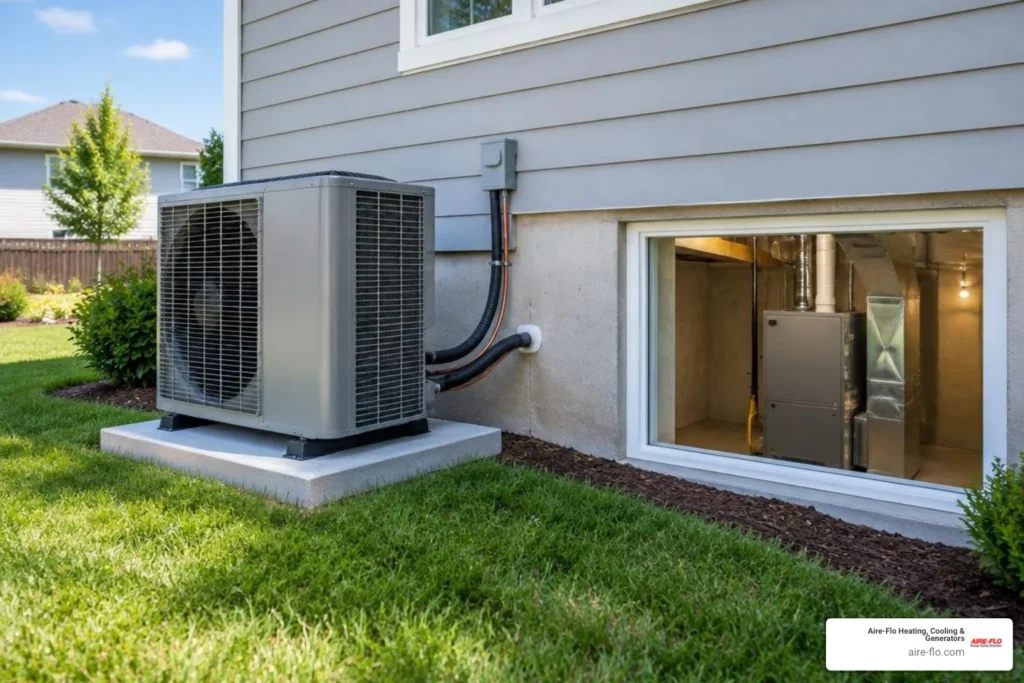
A heat pump heats and cools your home. A gas furnace provides heat, while a dual-fuel system pairs a heat pump with a furnace for colder days. For a Columbus home, the best choice depends on your heating needs, ductwork, and local gas and electric rates. Before installation, ask for a home heat-load calculation so the new system is sized correctly.
Aire-Flo Heating, Cooling & Generators has helped Central Ohio homeowners plan HVAC upgrades, including heat pump furnace installation. Our team can help you compare your options.

Heat Pump vs. Gas Furnace: How They Compare for Columbus Winters
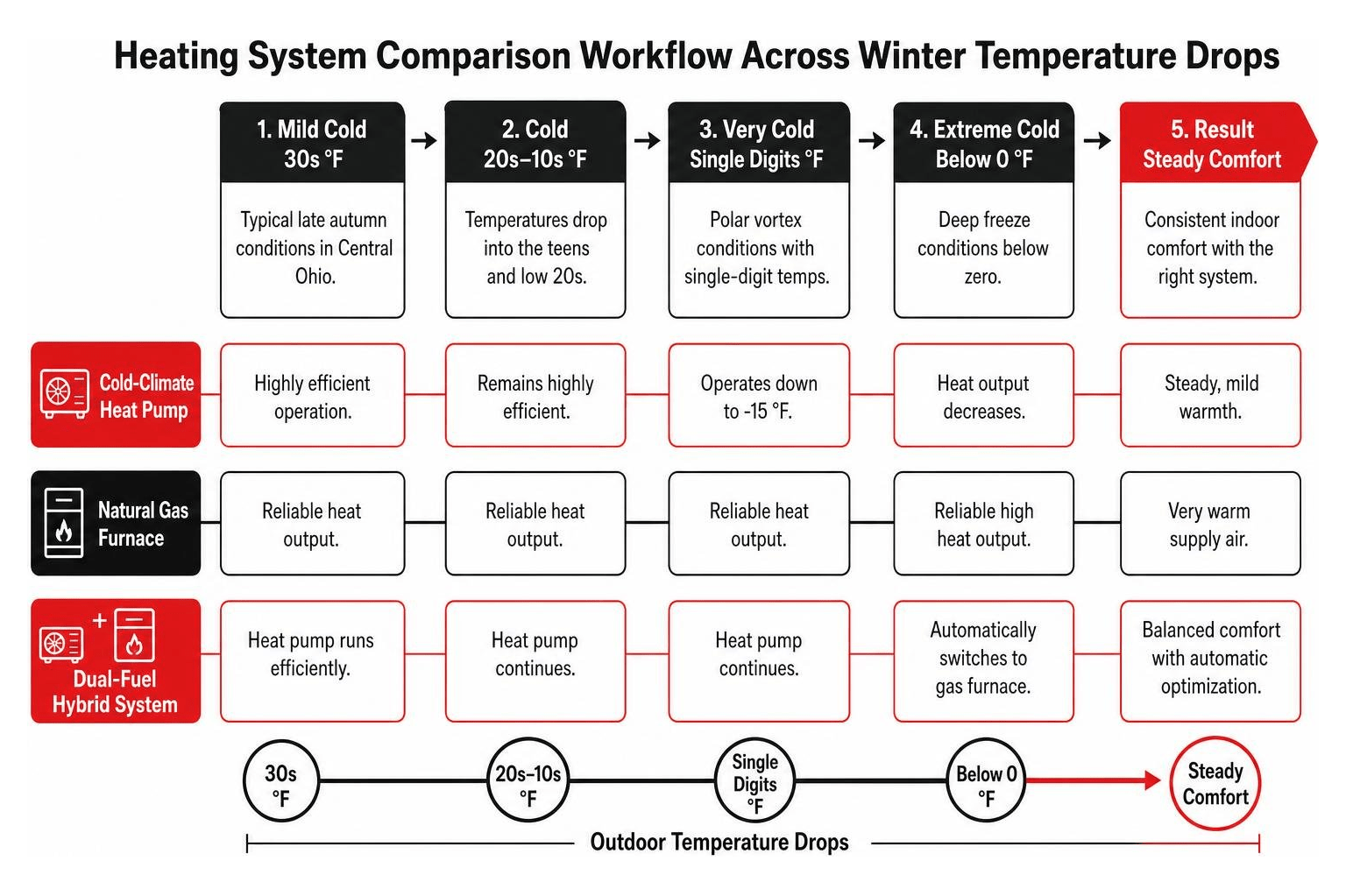
Central Ohio winters bring unpredictable weather. Temperatures in Columbus, Dublin, and Worthington often hover in the 30s during late autumn, only to drop into single digits when polar vortex winds sweep through the Scioto River valley. Choosing between a traditional gas furnace, an advanced heat pump, or a hybrid dual-fuel system comes down to how each technology manages these dramatic temperature swings.
Gas furnaces create warmth by burning fuel, typically natural gas. They deliver fast, high-temperature heat through your vents regardless of how cold it gets outside. In contrast, an electric heat pump does not create heat from scratch. Instead, it moves thermal energy from the outdoor air into your living spaces. Modern units can extract heat from outdoor air even when it feels freezing outside, operating like a refrigerator running in reverse.
To evaluate which option matches your home comfort goals, our team at Aire-Flo Heating, Cooling & Generators has outlined how these three setups compare across key performance categories.
| Heating Feature | Natural Gas Furnace | Cold-Climate Heat Pump | Dual-Fuel Hybrid System |
|---|---|---|---|
| Primary Fuel Source | Natural Gas | Electricity | Electricity and Natural Gas |
| Year-Round Function | Heating Only (Requires separate AC) | Heating and Air Conditioning | Heating and Air Conditioning |
| Extreme Cold Performance | Unaffected by outdoor air temps | Highly efficient down to 5°F; runs to -15°F | Automatic switch to gas during deep freezes |
| Supply Air Feel | Very warm (120°F to 140°F) | Steady, mild warmth (95°F to 105°F) | Mild electric warmth or hot gas heat |
| Environmental Impact | Produces on-site emissions | Zero direct emissions | Lower emissions during mild weather |
| Equipment Lifespan | 15 to 20 Years | 12 to 15 Years | 15 to 20 Years (balanced run time) |
For many local properties, combining these technologies provides balanced comfort throughout the year. Exploring comprehensive heating solutions allows you to select equipment tailored to your neighborhood’s infrastructure, whether you live in historic Clintonville or expanding neighborhoods in New Albany and Pickerington.
Efficiency Ratings and Cold-Climate Heating Capacity
Understanding energy efficiency metrics helps you calculate real-world operating value. Traditional gas furnaces are measured by Annual Fuel Utilization Efficiency (AFUE). A 96% AFUE rating means 96 cents of every dollar spent on gas turns into usable heat for your home, while 4 cents exits through the exhaust vent.
Heat pumps use two primary efficiency ratings:
- SEER2 (Seasonal Energy Efficiency Ratio 2): Measures cooling efficiency during summer months. Modern standards require minimum ratings of 14.3 to 15 SEER2 across our region.
- HSPF2 (Heating Seasonal Performance Factor 2): Measures heating efficiency over an entire winter season. Higher numbers indicate lower electric consumption per unit of warmth delivered.
In the past, traditional heat pumps struggled when temperatures dropped below freezing. As of September 2026, cold-climate inverter systems use variable-speed compressors to retain between 80% and 90% of their heating capacity at 5°F, continuing to deliver useful heat down to -15°F.
If your current heating setup struggles to maintain steady indoor temperatures or short-cycles during sudden cold snaps, watch for the warning signs you need a new furnace in Columbus before minor mechanical problems turn into total mid-winter breakdowns.
Upfront Costs, Operating Expenses, and Rebates
Evaluating equipment options requires looking at upfront investments alongside long-term monthly energy bills. Natural gas remains widely accessible across central Ohio, providing affordable heating during deep winter months. However, electric heat pumps deliver up to three to four times more heat energy than the electrical energy they consume during mild autumn and spring days. This efficiency can lower your overall seasonal utility bills.
Financial incentives also help lower equipment costs. Through 2026, federal tax credits provide savings up to $2,000 for qualifying high-efficiency heat pumps under the Energy Efficient Home Improvement Credit. Local Ohio electric and natural gas utilities also offer equipment rebates for qualifying high-efficiency heat pumps, modern furnaces, and smart thermostats.
The Dual-Fuel Hybrid Solution for Central Ohio Homes
A dual-fuel heating system combines an electric heat pump outdoors with a high-efficiency gas furnace indoors. Instead of relying solely on one fuel source, the hybrid setup selects the most efficient energy source based on live outdoor temperatures.
When outside temperatures sit between 35°F and 60°F, the electric heat pump handles the heating load at high efficiency while providing whole-home cooling in the summer. When temperatures fall below a preset balance point, your system automatically transitions to gas heating. Choosing a professional furnace installation for your indoor unit ensures proper integration between the gas burner assembly and the indoor heat pump coil.
How Hybrid Heating Balances Gas and Electric
The brain of a dual-fuel system is its smart staging thermostat. The system uses an outdoor temperature sensor or local weather data to manage two heating stages automatically.
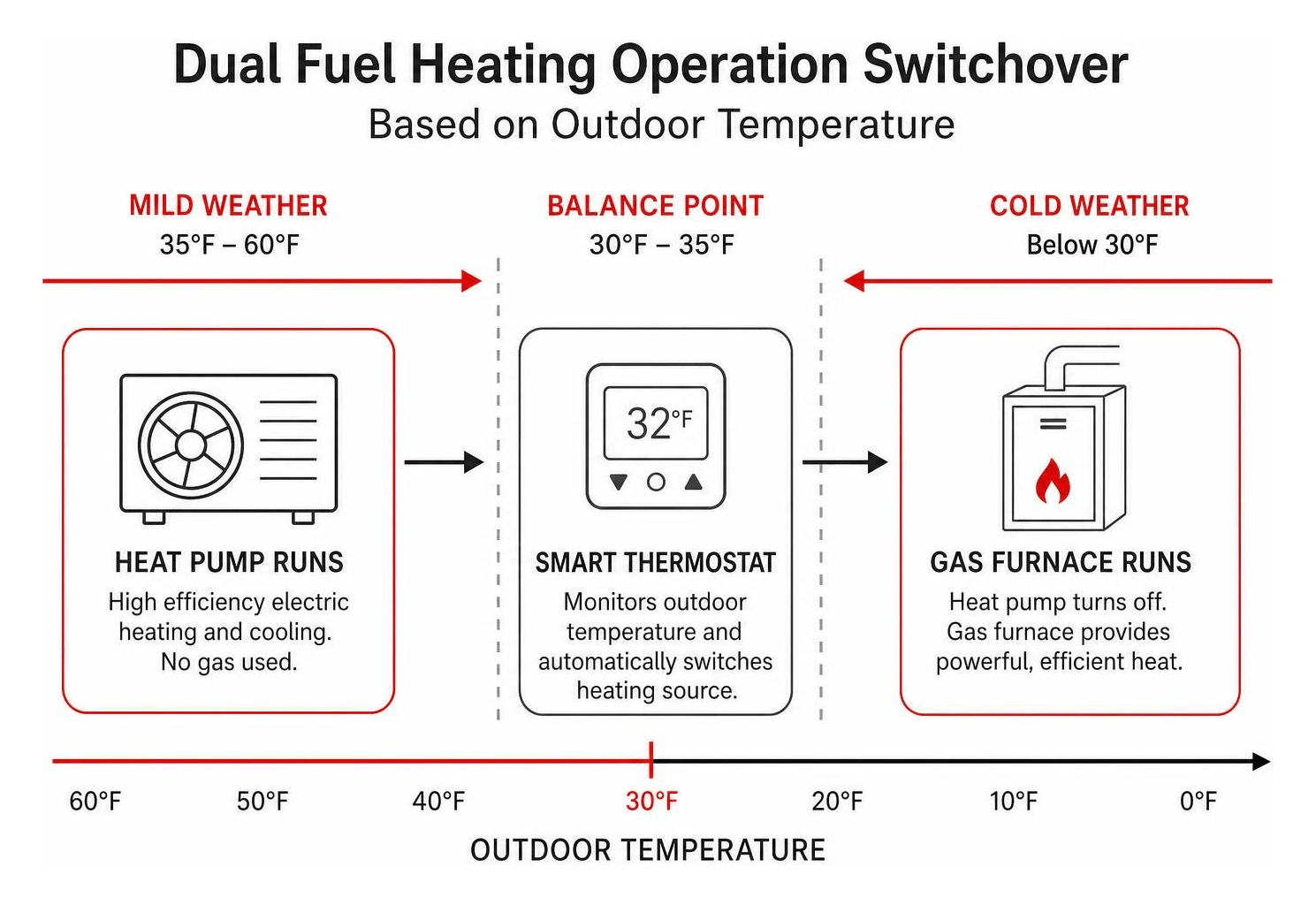
During mild weather, the variable-speed heat pump circulates warm air steadily throughout the house, keeping your home comfortable without burning natural gas. As winter deepens and outdoor temperatures cross the balance point (typically between 30°F and 35°F), the thermostat turns off the heat pump compressor and ignites the gas furnace. This switchover prevents the heat pump from relying on expensive electric resistance heat strips, using powerful gas heat to keep your home warm during severe winter storms.
When a Dual-Fuel System Makes the Most Sense
A hybrid dual-fuel system works particularly well for central Ohio homes under specific conditions:
- Existing Natural Gas Connections: If your home in Upper Arlington, Marysville, or Delaware already has gas service, adding a heat pump lets you switch fuels as utility rates change.
- Older or Moderately Insulated Homes: Older houses often lose heat faster during sustained freezes. The intense heat from a gas furnace maintains comfortable indoor temperatures even during sub-zero nights.
- Drafty or Sprawling Floor Plans: Multi-story homes benefit from the steady airflow of a heat pump in mild weather and the rapid warm-up times of a furnace in mid-winter.
Following practical cold weather furnace preparation helps keep your hybrid system running smoothly through every Ohio freeze.
Planning Your Heat Pump Furnace Installation in Central Ohio
Upgrading your home heating requires detailed planning, accurate measurements, and certified installation practices. Every home has unique heating loads, duct dimensions, and electrical layouts. Working with an experienced contractor for your expert heat pump installation ensures all equipment meets local municipal building codes, safety rules, and permit guidelines across Franklin, Delaware, and surrounding counties.
Manual J Sizing and Ductwork for Heat Pump Furnace Installation
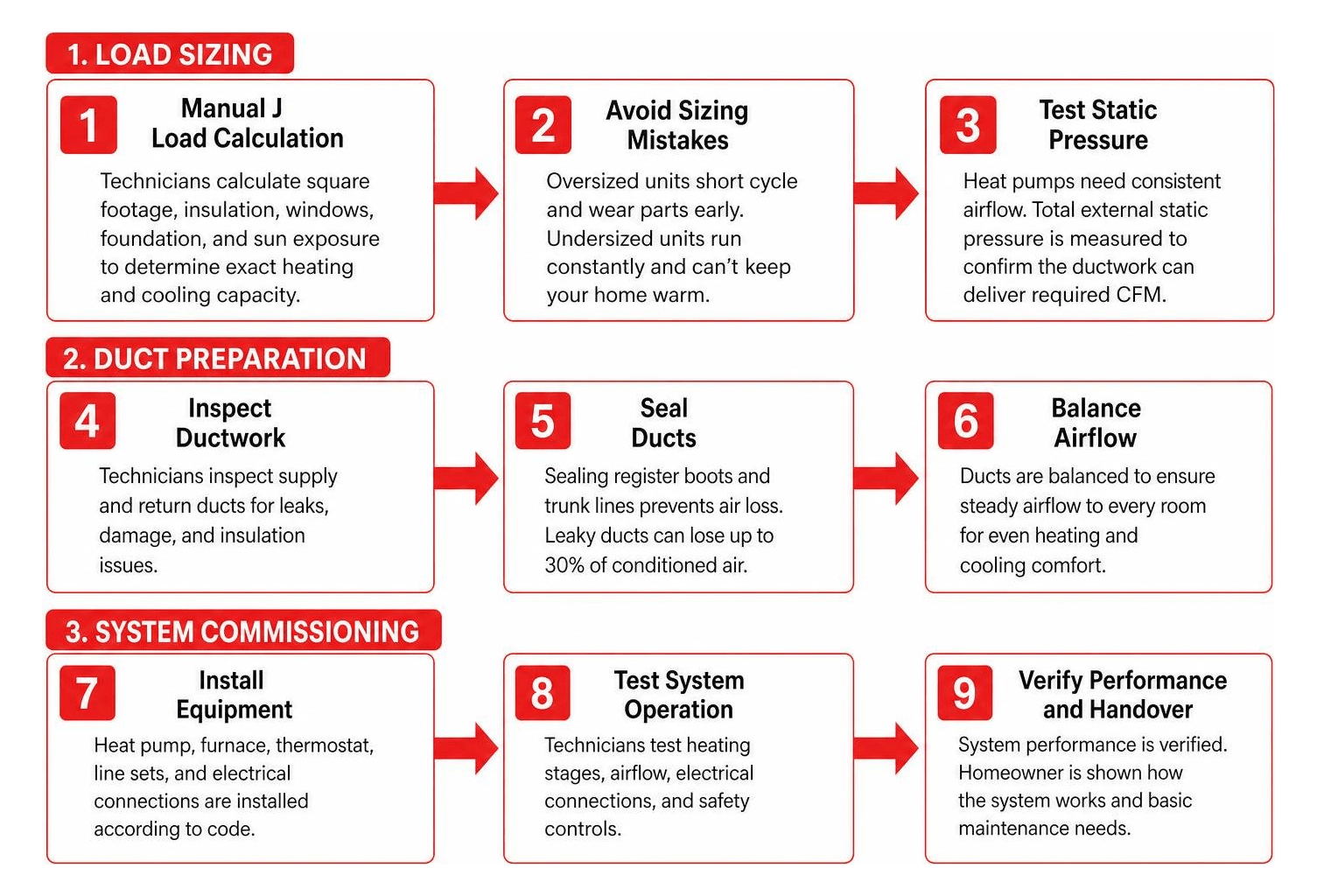
A successful heating project starts with a formal Manual J load calculation. Our technicians calculate your home’s square footage, wall insulation levels, window types, foundation style, and sun exposure to determine the exact heating and cooling capacity required.
- Avoiding Sizing Mistakes: Oversized units turn on and off too frequently, creating hot and cold spots while wearing out parts early. Undersized units run constantly without keeping your home warm on cold winter days.
- Testing Static Pressure: Heat pumps require consistent airflow to transfer heat efficiently. Our team measures total external static pressure to confirm your ductwork can deliver the necessary cubic feet per minute (CFM) of air.
- Duct Sealing and Balancing: Leaky ducts can lose up to 30% of conditioned air into unheated attics or crawlspaces. Sealing register boots and trunk lines keeps heated air inside your living areas.
Scheduling regular furnace maintenance after installation keeps internal blower motors, condensate drains, and safety controls clean and reliable season after season.
Electrical Requirements and Line Sets for Heat Pump Furnace Installation
Transitioning to a modern heat pump often requires electrical and refrigerant updates:
- Dedicated 240V Electrical Circuits: Heat pumps require dedicated electrical feeds from your home’s main panel. If you live in an older home in Clintonville or Plain City with a 100-amp service panel, our team will evaluate whether you need a panel upgrade before adding new equipment.
- Updated Refrigerants: Modern systems use next-generation refrigerants, such as R-454B, which provide higher operating efficiency and lower environmental impact. These systems require precise line set sizing, nitrogen-purged brazing, and deep vacuum decay testing below 500 microns to keep the refrigeration circuit completely free of moisture.
- Outdoor Unit Placement: We install outdoor condensers on raised composite pads or wall brackets elevated above regional snow lines. This prevents drifting snow and winter ice accumulation from blocking outdoor coil airflow in Grove City, Hilliard, or Pataskala.
If you are planning updates in Franklin County, our specialized Upper Arlington furnace installation technicians ensure every component connects properly to your ductwork and utility supply.
Frequently Asked Questions About Columbus Heating Systems
Can a heat pump handle freezing sub-zero temperatures in Columbus?
Yes. Modern cold-climate heat pumps feature advanced inverter-driven compressors that operate efficiently down to -15°F. For the rare days when central Ohio experiences sustained sub-zero temperatures, heat pump installations use auxiliary electric heat strips or an indoor gas furnace in a dual-fuel configuration to keep your home warm and safe.
How much can I save on utility bills by upgrading my heating system?
Upgrading an aging 80% AFUE furnace and an older 10 SEER air conditioner to a high-efficiency heat pump or dual-fuel system can reduce seasonal heating and cooling energy use by 20% to 40%. Exact savings depend on your home insulation levels, window efficiency, thermostat settings, and local utility rates.
What rebates and tax credits are available in Ohio in 2026?
Homeowners can claim federal 25C tax credits of up to $2,000 for qualifying high-efficiency heat pump installations. Local electric and gas utility providers serving central Ohio also offer equipment rebates on qualifying variable-speed heat pumps, 96%+ AFUE gas furnaces, and smart thermostats. Our team helps you identify qualifying equipment and provides the documentation needed for rebate claims.
Conclusion
Choosing the right heating system for your central Ohio home comes down to your home’s layout, fuel access, and comfort goals. A high-efficiency gas furnace provides reliable, high-temperature heat on the coldest winter days, while a modern cold-climate heat pump offers efficient year-round heating and cooling in a single system. For many local families, a dual-fuel hybrid system delivers the best balance of energy efficiency, fuel flexibility, and whole-home comfort.
Since 1951, Aire-Flo Heating, Cooling & Generators has delivered trusted, top-rated HVAC service backed by our 100% satisfaction guarantee. Whether you live in Columbus, Dublin, Westerville, Canal Winchester, or Galena, our licensed technicians can calculate your home heating load, guide you through system options, and install your equipment with care.
Ready to find the ideal heating solution for your home? Contact our professional heat pump and furnace installation technicians to schedule your in-home consultation and load calculation.