

Why Humidity Control Is the Missing Piece in Your Home Comfort System
Humidifiers for HVAC systems add moisture to your home’s air through existing ductwork, helping maintain healthy indoor humidity levels in every room without portable units or constant manual refilling.
Quick answer: what you need to know
| Question | Answer |
|---|---|
| What does an HVAC humidifier do? | Adds moisture to air circulated by your heating system |
| Ideal indoor humidity range | 30-50% (EPA recommendation) |
| Main types | Bypass, fan-powered, steam |
| Installation cost | Varies based on system type, home layout, and installation needs |
| Lifespan | 10-15 years with proper maintenance |
| Best for | Dry climates, large homes, health concerns |
Most Columbus-area homeowners do not think much about humidity until winter arrives. Your furnace runs often, and the air inside your home can get very dry. That dry air can lead to cracked wood floors, static shocks, dry throats, and a home that still feels uncomfortable no matter how high you turn up the thermostat.
The good news? A whole-house humidifier built into your HVAC system handles this quietly and automatically, with no buckets to refill and no portable units to move from room to room.
At Aire-Flo Heating, Cooling & Generators, we have seen how much of a difference proper humidity control can make for family comfort, indoor air quality, and overall home health. In this guide, you’ll learn the basics of humidifiers for HVAC systems so you can make a smart, confident decision for your home.
What is a Central HVAC Humidifier?
If you have ever used a small, portable humidifier in a bedroom, you know the drill: you have to carry a heavy water tank to the sink, spill half of it on the floor, and listen to it gurgle all night. While those units are okay for a single small room, they can’t touch the efficiency of a central system.
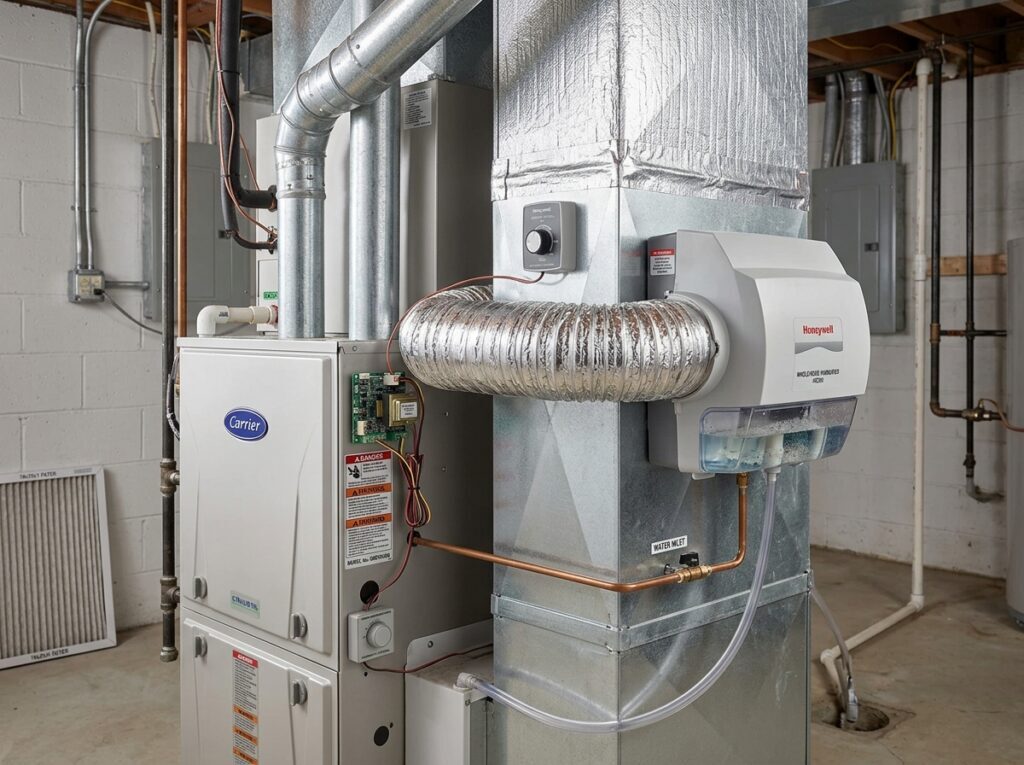
A central HVAC humidifier is a device installed directly into your home’s furnace or air handler. Instead of sitting in a corner, it works with your ductwork to distribute moisture evenly to every single room in the house. Because it is tied directly into your home’s plumbing, there are no tanks to refill. It draws water as needed and uses the furnace’s blower fan to push humidified air through your vents.
The “brain” of the system is the humidistat. Like a thermostat tracks temperature, the humidistat measures the moisture in your air. When indoor air gets too dry, which is common during cold Ohio winters, it signals the humidifier to turn on. That gives you a simple “set it and forget it” setup that helps keep your home’s humidity balanced.
In places like Bexley or Upper Arlington, where many homes have beautiful, historic woodwork, this consistent moisture is vital. Without it, the dry winter air acts like a sponge, sucking moisture out of everything it touches—including your skin and your furniture. You can learn more about why here: HVAC Humidifiers Winters Feel Dry and how a central system addresses the problem.
Comparing the Main Types of Humidifiers for HVAC
Not every home in Columbus has the same needs. A small ranch in Westerville requires a different approach than a sprawling estate in Dublin. When we look at humidifiers for HVAC integration, there are three primary technologies we recommend.
Each type has its own way of introducing moisture into the air stream. The “best” one for you depends on your home’s size, your existing HVAC setup, and how much humidity you actually need.
| Feature | Bypass Humidifier | Fan-Powered Humidifier | Steam Humidifier |
|---|---|---|---|
| Operation | Uses furnace blower | Built-in fan | Boils water into steam |
| Water Output | Up to 17 Gallons/Day | Up to 18 Gallons/Day | Up to 34+ Gallons/Day |
| Efficiency | High (No motor) | Medium | Lower (Uses electricity) |
| Best For | Small to Mid homes | Large homes | Large or “leaky” homes |
Evaporative Bypass and Fan-Powered Models
These are the most common types of humidifiers for HVAC systems. They work on the principle of evaporation—think of it like a breeze blowing over a wet cloth.
- Bypass Humidifiers: These are installed on either the supply or return plenum of your furnace. A small portion of the heated air is “bypassed” through the humidifier, where it passes over a water-soaked pad (often called a water panel). The air picks up moisture and then circles back into the main air stream. These are incredibly reliable because they have very few moving parts.
- Fan-Powered Humidifiers: These look similar to bypass models but include their own internal fan. This means they don’t rely solely on the furnace’s pressure to move air through the water panel. Because they have their own “push,” they can often produce more humidity and are a great choice for larger homes or homes with heat pumps that don’t get as hot as traditional gas furnaces.
A common question we get in the Columbus area is: Should I Run a Humidifier with My Air Conditioner? Generally, we use humidifiers in the winter because AC units naturally dehumidify the air in the summer. However, in very specific dry climates or unique home situations, the answer can vary.
High-Capacity Steam Humidifiers
If you have a very large home or a house with lots of vaulted ceilings and “leaky” older construction, evaporative models might struggle to keep up. That is where steam comes in.
Steam humidifiers are the heavy hitters of the industry. Instead of waiting for air to evaporate water off a pad, these units use electrode technology to boil water and create steam instantly. This steam is then injected directly into your ductwork.
One of the biggest perks of steam is that it can run even when the furnace isn’t actively heating, ensuring your humidity levels never dip, regardless of the outdoor temperature.
Key Benefits of Balanced Indoor Humidity
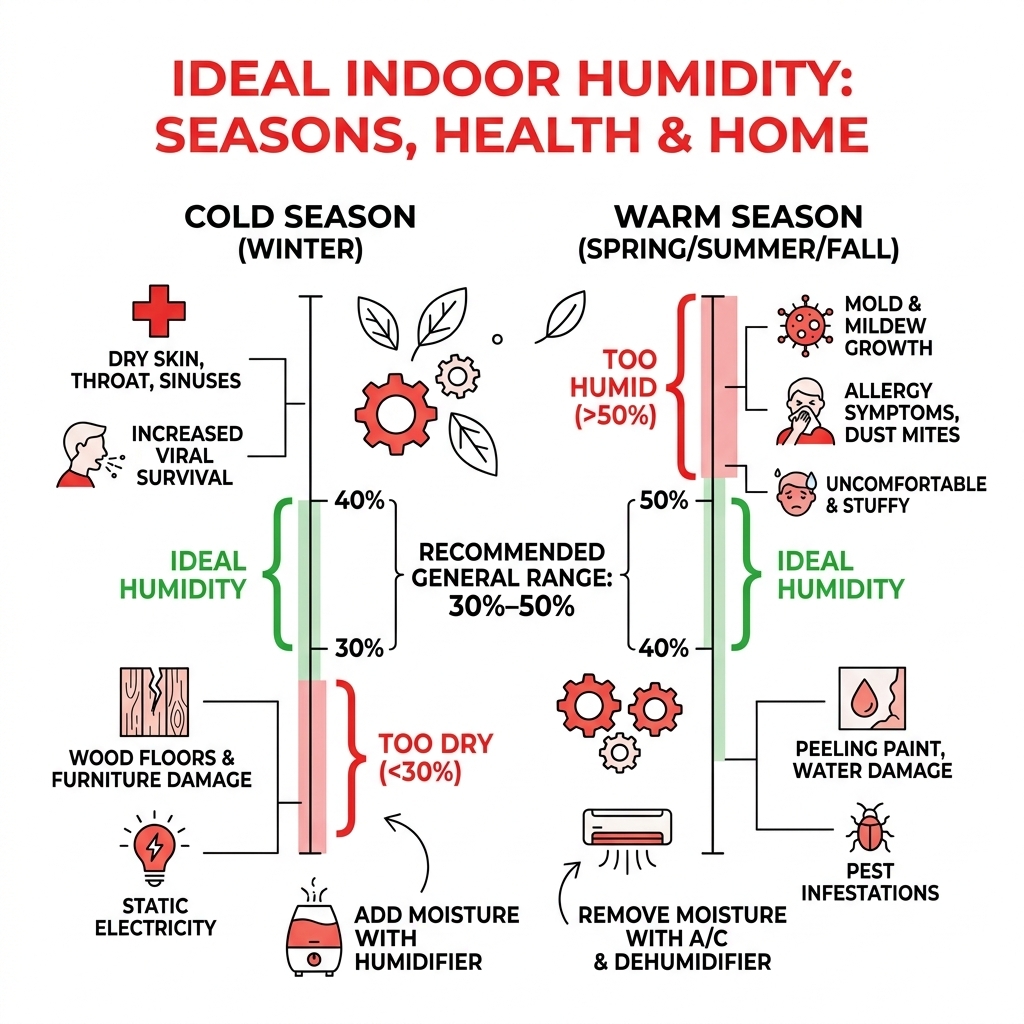
Why install a humidifier? It does more than cut down on annoying static shocks when you touch a doorknob, though that is certainly a nice bonus. Balanced indoor humidity, which the EPA recommends keeping between 30% and 50%, can affect your health, your energy costs, and even the condition of your home.
1. Respiratory Health and Virus Protection Dry air dries out your mucous membranes—the sticky lining in your nose and throat that catches germs. When those linings dry out, you become more susceptible to colds, the flu, and viruses. Research shows that many viruses thrive and spread more easily in dry air. By keeping your home at a steady 40-60% humidity, you help your body’s natural defenses stay strong.
2. Better Sleep and Skin Comfort Do you wake up with a “crusty” nose or a scratchy throat in January? That’s the dry air at work. Proper humidity keeps your skin hydrated and your airways clear, which can significantly reduce snoring and improve overall sleep quality.
3. Protecting Your Home’s Interior Wood is a natural material that expands and contracts based on moisture. In a dry Columbus winter, hardwood floors can begin to gap, and expensive crown molding can pull away from the ceiling. We have even seen pianos go out of tune and wooden furniture crack because the air was too dry. A humidifier protects these investments.
4. Energy Efficiency This is the “secret” benefit. Humid air holds heat better than dry air. Have you ever noticed how a 90-degree day in Ohio feels much hotter when it’s humid? The same principle applies indoors. When the air is properly humidified, you feel warmer at a lower temperature. This allows you to turn your thermostat down a couple of degrees, which can lead to noticeable savings on your heating bill.
To get the most out of these benefits, it is important to understand Winter Indoor Humidity Levels and how to monitor them as the temperature outside drops.

Choosing and Sizing Your Whole-House System
Choosing the right humidifiers for HVAC isn’t as simple as picking the biggest one on the shelf. If you over-humidify your home, you risk mold growth and condensation on your windows. If you under-size it, you won’t feel the benefits.
When we visit a home in Worthington or Dublin to give a quote, we look at several factors:
- Total Square Footage: This determines the volume of air that needs to be treated.
- Home Tightness: Newer homes are built “tight,” meaning they hold moisture better. Older homes in areas like Clintonville are often “loose,” meaning they leak air and require a higher-capacity humidifier to maintain balance.
- Existing HVAC System: We ensure the humidifier is compatible with your furnace’s blower capacity and duct size.
We work with leading brands like AprilAire, Honeywell, Carrier, and Trane to ensure our customers get a system that fits their specific footprint. You can read our deeper dive on the Best Central HVAC Humidifier for Your Home to see which features might matter most to you.
Selecting Humidifiers for HVAC Based on Home Size
Sizing is measured in Gallons Per Day (GPD). Here is a general rule of thumb for “average” construction homes:
- Up to 2,000 sq. ft.: Typically requires 10-12 GPD.
- 2,000 to 4,000 sq. ft.: Typically requires 12-17 GPD.
- Over 4,000 sq. ft.: Usually requires a high-capacity fan-powered unit or a steam humidifier.
If your home has lots of wood flooring or high ceilings, you may need to “size up” to ensure the system can keep up with the demand.
Installation, Maintenance, and Cost Factors
Installing humidifiers for HVAC systems is a job for the pros. It involves cutting into your ductwork, tapping into your home’s water line, and often wiring the unit into your furnace’s control board. At Aire-Flo, we ensure the installation is leak-free and calibrated correctly from day one.
Typical Costs The total cost for a whole-house humidifier, including professional installation, generally ranges from $400 to $1,500.
- Bypass models are usually the most budget-friendly ($400-$700).
- Fan-powered models sit in the middle ($600-$900).
- Steam models are the premium option ($1,000-$1,500+) due to the complexity of the unit and the electrical work required.
While the upfront cost is higher than a $50 portable unit, the 10-15 year lifespan and the whole-home benefits make it a much better long-term value. You can find more details on how these systems contribute to Home Comfort with HVAC Humidifiers.
Maintenance Tips for Humidifiers for HVAC Longevity
The biggest enemy of a humidifier is mineral buildup. Since Columbus water can be hard, calcium and magnesium deposits will eventually clog the system if left alone.
- Change the Water Panel: For evaporative models, you should replace the honeycomb-like pad at least once a year—usually at the start of the heating season. If you have very hard water, you might need to do it twice.
- Check the Drain Line: Ensure the small plastic tube that carries excess water away isn’t clogged with sediment.
- Clean the Solenoid Valve: Occasionally, minerals can gunk up the valve that turns the water on and off. A quick professional cleaning during your annual HVAC tune-up keeps this working perfectly.
- Steam Canisters: If you have a steam unit, the canister that boils the water will eventually fill with minerals. These are designed to be swapped out easily once a year.
Frequently Asked Questions
Should a whole-house humidifier run all the time?
No. Your humidifier should only run when your humidistat senses that the moisture level has dropped below your set point. Most units are wired to only operate when the furnace blower is running, ensuring that moisture is actually being moved through the house rather than just sitting in the ducts.
How long do central HVAC humidifiers typically last?
With proper maintenance, including changing the pads and keeping the lines clear, most humidifiers for HVAC systems last about 10 to 15 years. In many homes, they can last nearly as long as the furnace they are connected to.
Do I need a dedicated water line for installation?
Yes, in most cases. A whole-house humidifier usually connects to a nearby cold water pipe with a small valve and flexible supply line. It is a permanent setup, so the system gets the water it needs automatically without any daily refilling on your part.
Conclusion
Living in Central Ohio means dealing with some pretty extreme weather shifts. We go from sticky, humid summers to bone-dry, freezing winters. While your furnace handles the temperature, it’s the humidifier that handles the feel of your home.
At Aire-Flo Heating, Cooling & Generators, we’ve spent 75 years helping our neighbors in Columbus, Westerville, and Hilliard breathe easier. We believe that your home should be a sanctuary, and proper humidity is a massive part of that equation. Whether you are looking to protect your new hardwood floors or you’re just tired of waking up with a dry throat, we have the expertise to find the right solution for you.
We stand behind every installation with a 100% satisfaction guarantee. If you’re ready to transform your indoor air quality, we’re ready to help.
Improve your indoor air quality today and discover how balanced humidity can improve comfort throughout your home. Contact the HVAC experts at Aire-Flo Heating, Cooling & Generators or schedule an appointment online to stay more comfortable all winter long.