

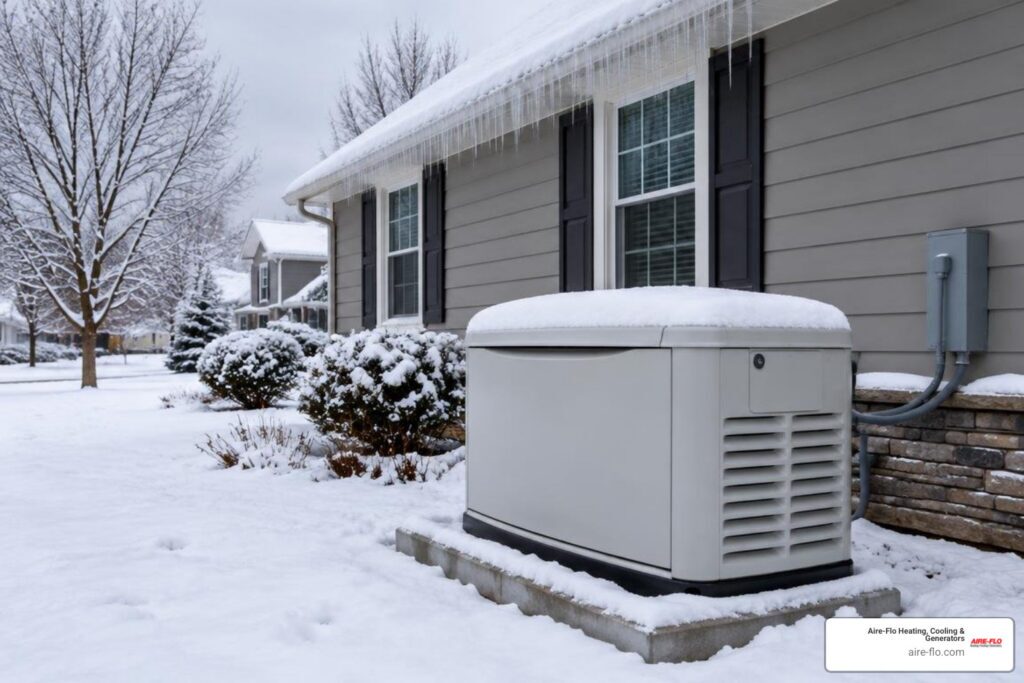
Choosing an Automatic Standby Generator for an Ohio Winter
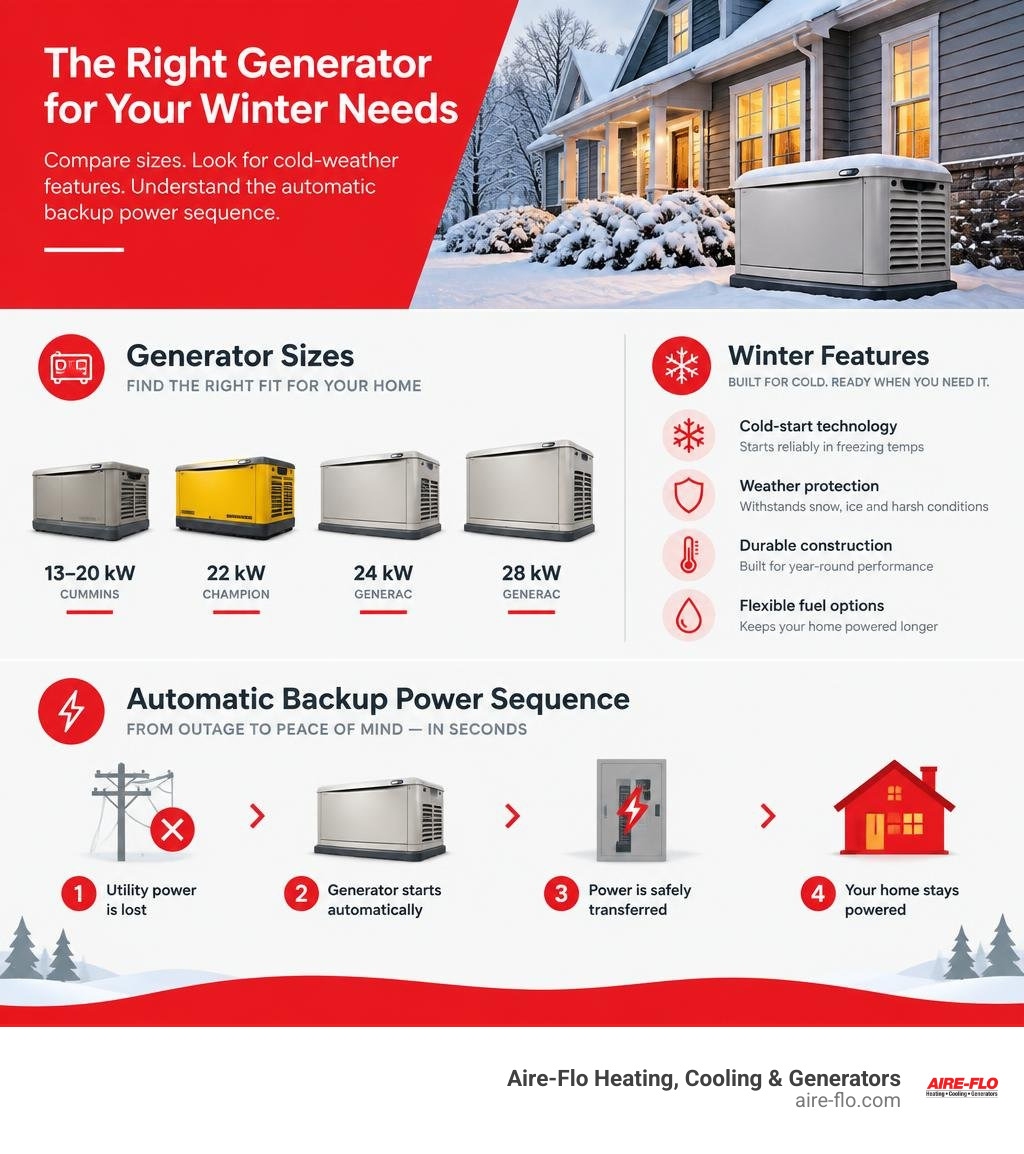
The best automatic standby generator is the one that can start in the cold and power the loads your home needs. Compare the Generac 24kW and 28kW, Champion 22kW, and Cummins 13kW to 20kW models by your heating system’s power needs, fuel supply, cold-start features, and local service options. A larger model is not always the better fit.
Winter outages can shut down a furnace blower, sump pump, and other equipment that protects your home. This guide will help you compare models, then check what your home needs before you buy.
Our team at Aire-Flo Heating, Cooling & Generators has decades of experience providing HVAC and generator service across central Ohio. We can help you choose an automatic standby generator that fits your home’s winter power needs.
How an Automatic Standby Generator Protects Your Home in Freezing Conditions
Sub-zero temperatures put extreme pressure on the utility electrical grid. Heavy snow accumulation, freezing rain, and high winds bring down power lines across central Ohio every winter. During severe weather events, such as Winter Storm Fern in early 2026, widespread utility grid failures left over one million households without electricity, forcing families to endure days without central heating.
When grid power drops, interior temperatures plummet quickly. Without electricity, standard furnaces and heat pumps cannot circulate warm air, leaving water pipes vulnerable to bursting. An automatic standby generator permanently connects to your home electrical system, restoring power within seconds of an outage to safeguard plumbing, appliances, and critical living spaces. For a deeper look at the mechanics, see how backup generators work.
Understanding the Automatic Transfer Switch
The automatic transfer switch (ATS) acts as the brain of your standby power setup. It continuously monitors incoming voltage from the electric utility. When it detects a complete blackout or a dangerous brownout, it commands the generator engine to start.
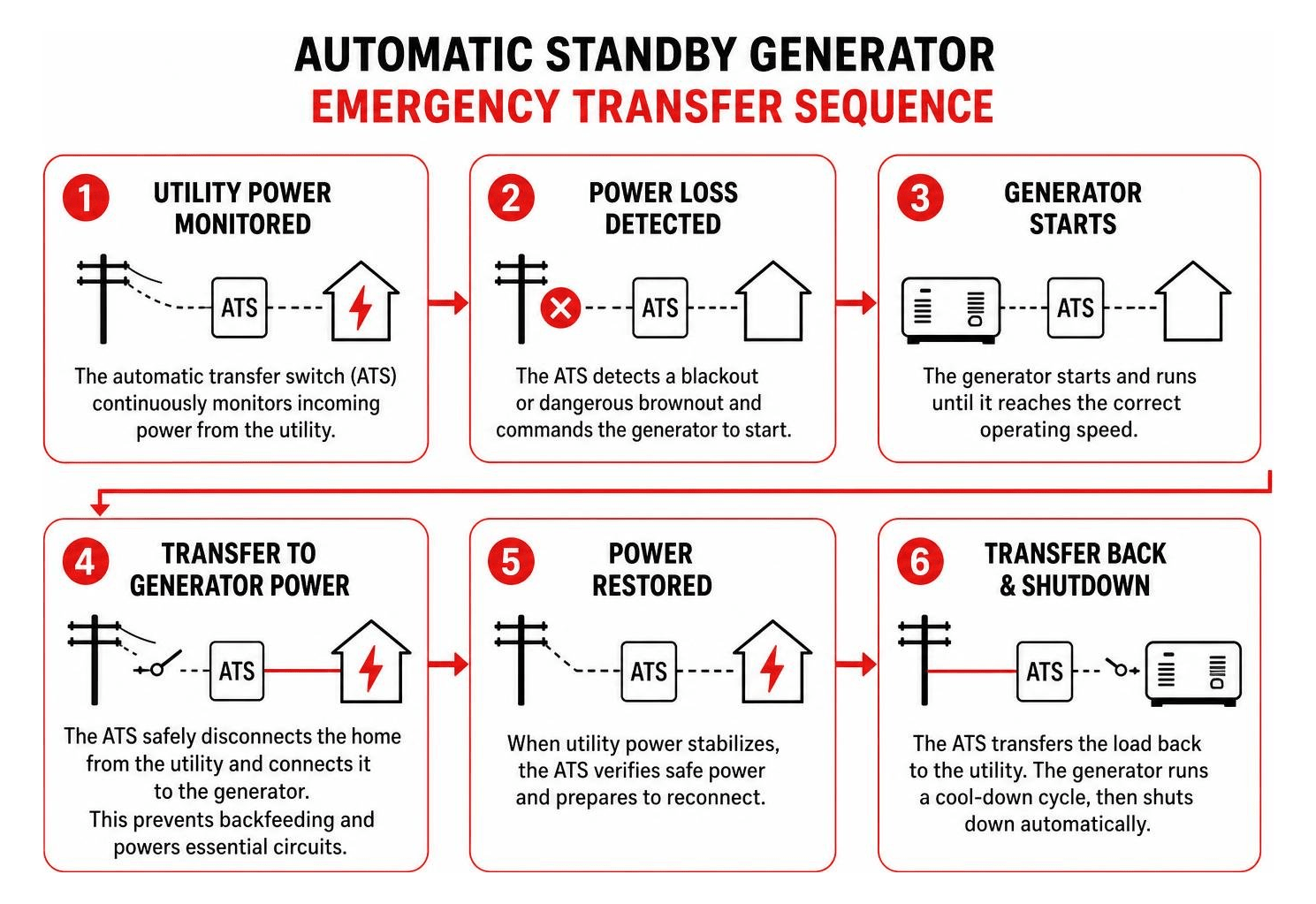
Once the generator reaches the correct operating speed, the ATS safely disconnects your home from the main utility line and connects the generator circuit. This physical separation prevents backfeeding, which protects utility line workers from hazardous electrical currents. When utility power stabilizes, the switch transfers your electrical load back to the grid and allows the generator to run through a brief cool-down cycle. Homeowners curious about real-world performance often ask, do automatic standby generators work reliably in extreme cold? The answer is yes, provided the system is sized and maintained properly.
Cold-Weather Starting and HVAC Integration
Starting an engine in sub-zero Ohio weather requires robust hardware. Modern standby units feature heavy-duty starting mechanisms, including 24-volt starter systems and automated carburetors designed to ignite quickly in freezing ambient air.
Heating equipment creates heavy electrical demands during winter. While a gas furnace burns natural gas or propane to create heat, its electrical blower motor requires substantial starting power to circulate air through ductwork. Heat pumps equipped with auxiliary electric heat strips demand even more energy when temperatures fall below freezing. Integrating an automatic standby generator with your HVAC system ensures that both baseline running watts and heavy starting surges are covered without tripping circuit breakers.
Comparing Top Whole-House Standby Generator Models
Finding the right model depends on your total electrical demand, fuel supply, and property layout. The table below outlines how leading standby unit classes perform across major categories.
| Generator Class | Capacity Range | Fuel Consumption (Full Load) | Sound Level | Key Cold-Weather Features |
|---|---|---|---|---|
| High-Capacity Air-Cooled Unit | 24 kW (LP) / 24 kW (NG) | 3.9 gal/hr LP / 306 cu ft/hr NG | ~65 dBA | Advanced power regulation, Wi-Fi monitoring, compact footprint |
| High-Capacity Smart Bundle Unit | 28 kW (LP) / 28 kW (NG) | 3.97 gal/hr LP / 345 cu ft/hr NG | ~67 dBA | Smart thermostat integration, cellular remote diagnostics, surge protection |
| Mid-Size Cold-Climate Unit | 22 kW (LP) / 19.8 kW (NG) | 3.6 gal/hr LP / 270.2 cu ft/hr NG | 67 dBA | 24V starting system down to -22°F, streamlined wiring, app-based setup |
| Quiet Mid-Size Unit | 13 kW to 20 kW | 2.5 to 3.4 gal/hr LP | ~65 dBA | Patented sound attenuation, cold-weather heating kits, remote mobile monitoring |
High-Capacity 24kW to 28kW Backup Systems
High-capacity systems supply enough wattage to support large properties, multiple central heating systems, and high-draw electric appliances at the same time. A 28kW unit is one of the most powerful air-cooled systems available, and it can integrate directly with smart home thermostats to manage heavy HVAC loads during severe winter storms. This intelligent load management balances heating needs while protecting the generator engine from overload.
A 24kW unit in this class often uses a compact design that takes up to 70 percent less yard space than many liquid-cooled alternatives. It can also include built-in surge protection to defend sensitive electronics, computers, and modern furnace control boards against voltage spikes. Remote diagnostic tools allow homeowners and technicians to check battery levels, engine run hours, and operating status from a mobile app.
Mid-Size 13kW to 22kW Home Units
For standard single-family homes, mid-size generators offer balanced capacity and high fuel efficiency. A 22kW unit in this class often features streamlined communication technology, allowing the generator to communicate with the automatic transfer switch through existing home electrical wiring. This setup reduces installation complexity while delivering clean power for delicate appliances. Its 24-volt starting system is specifically built to operate in ambient temperatures as low as -22°F.
13kW to 20kW units in this range focus on advanced sound attenuation and neighborhood-friendly operation. These systems use specialized acoustic enclosures to lower engine noise while maintaining high airflow for cooling. When evaluating these options, reviewing a guide on considering a new home generator helps match household square footage to specific unit capacities. For more background on how these systems perform in real conditions, see how backup generators work.
Sizing and Fuel Options for Severe Winter Weather
Selecting an undersized generator can cause system shutdowns during peak electrical demand, while an oversized unit burns excess fuel during an extended winter storm. Proper sizing requires calculating both running watts and starting watts for every connected circuit. A professional generator installation assessment can help match the system to your heating equipment, water-management needs, and essential circuits.
Calculating Winter Electrical Load for an Automatic Standby Generator
Every electrical appliance has two power ratings: running watts (continuous power needed to operate) and starting watts (extra surge power required for several seconds to start an electric motor). Winter heating loads require careful calculation.
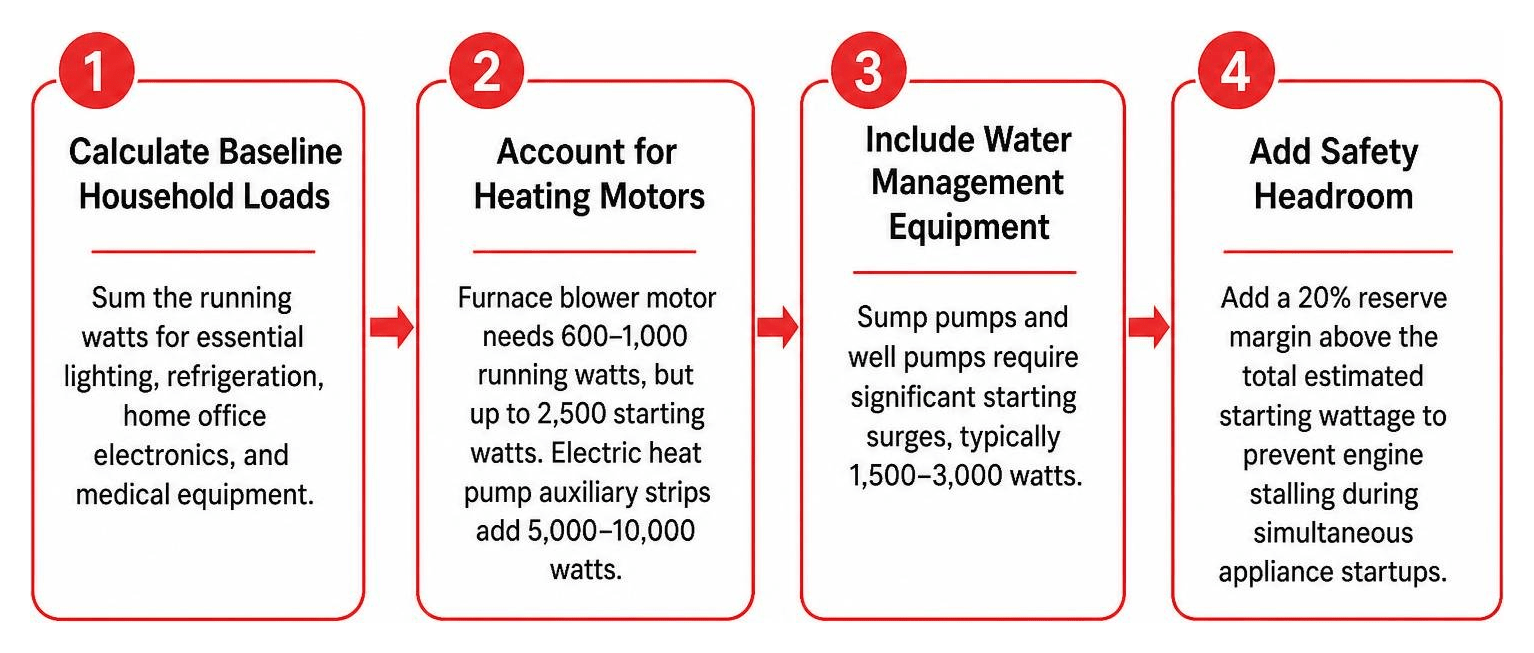
- Calculate Baseline Household Loads: Sum the running watts for essential lighting, refrigeration, home office electronics, and medical equipment.
- Account for Heating Motors: A standard forced-air furnace blower motor requires 600 to 1,000 running watts, but can require up to 2,500 starting watts. Electric heat pump auxiliary strips can pull an additional 5,000 to 10,000 watts.
- Include Water Management Equipment: Sump pumps and well pumps demand significant starting surges, typically between 1,500 and 3,000 watts.
- Add Safety Headroom: Add a 20 percent reserve margin above the total estimated starting wattage to prevent engine stalling during simultaneous appliance startups.
Reviewing a buyer readiness test for whole-house generators helps clarify your critical circuits before making equipment decisions.
Natural Gas vs. Liquid Propane in Sub-Zero Climates
Standby generators operate primarily on natural gas (NG) or liquid propane (LP). Each fuel source behaves differently in freezing conditions:
- Natural Gas: Delivered directly through underground municipal utility lines, natural gas provides an uninterrupted fuel supply that never requires manual refueling during a blizzard. However, natural gas delivers slightly lower energy density per cubic foot than propane, meaning a generator produces roughly 10 percent less maximum wattage on natural gas compared to liquid propane.
- Liquid Propane: Stored in on-site tanks, propane offers high energy density and maximum generator wattage output. In freezing weather, propane tank pressure drops as the liquid vaporization rate slows. A large 250-gallon to 500-gallon on-site tank is required to maintain adequate pressure and provide 120 to 250 hours of continuous run time during severe winter storms.
Safe Installation, Permitting, and Critical Winter Maintenance
Installing a permanent standby power system involves complex electrical work, plumbing, and strict adherence to municipal building codes. Working with licensed technicians ensures that your generator meets safety guidelines and operates smoothly through the coldest months.
Carbon Monoxide Safety and Placement Guidelines for an Automatic Standby Generator
Standby generator engines produce carbon monoxide (CO), an invisible, odorless, and toxic gas. Safety organizations such as the American Red Cross emphasize the critical importance of proper stationary generator placement to prevent dangerous exhaust fumes from entering living areas.
- Placement Clearances: Install the generator outdoors on a level concrete pad, positioned away from windows, doors, soffit vents, and fresh air intake louvers.
- Neighbor Proximity: Maintain adequate distance from neighboring property lines to ensure proper exhaust dispersal.
- Home Sealing: Inspect and seal exterior penetrations, including dryer vents, crawl space vents, and window caulking near the installation pad.
- Indoor Detection: Install certified carbon monoxide alarms inside the home, placing detectors near sleeping areas on every level.
Essential Pre-Winter Maintenance Checklist
Winter reliability depends on consistent pre-season maintenance. Follow this checklist before freezing weather arrives:
- Switch to Synthetic Engine Oil: Use 5W-30 full synthetic motor oil to ensure smooth engine lubrication during sub-zero cold starts.
- Test Starting Battery Voltage: Cold temperatures drain automotive-style batteries quickly; clean the battery terminals and verify that the onboard trickle charger maintains full voltage.
- Install Cold-Weather Accessories: Fit the generator with thermostatically controlled battery warmers and oil pan heaters to support rapid starting.
- Inspect Filters and Enclosure Vents: Replace dirty air and fuel filters, and clear leaves, snow drifts, and debris from the intake and exhaust louvers.
- Verify Exercise Cycles: Confirm that the weekly automated self-exercise schedule runs without error codes or warning lights.
For complete system setup and safety compliance, schedule professional generator installation with certified technicians who understand local Ohio utility requirements.
Frequently Asked Questions About Standby Generators
What size standby generator is needed to power an entire house during a winter storm?
Most standard homes require a unit rated between 15kW and 24kW to power central heating, refrigeration, water pumps, lighting, and kitchen appliances. Homes with multiple central air conditioners, electric heat pump auxiliary strips, or large square footage benefit from high-capacity 24kW to 28kW models. Smaller 13kW units can support essential circuits when electrical loads are managed carefully.
Can an automatic standby generator run continuously during extended outages?
Yes, quality standby generators are engineered to run for days or weeks during major winter power outages, provided the engine oil level is checked regularly. Most manufacturers recommend shutting down the unit briefly every 48 to 72 hours of continuous run time to inspect the engine oil level, clean the enclosure, and check for fuel leaks.
How much does it cost to buy and install a whole-home standby generator?
The total investment includes the generator unit, the automatic transfer switch, professional electrical wiring, plumbing for gas lines, local permits, and concrete pad preparation. Total project costs vary based on the distance between the electrical meter and gas supply, the electrical panel configuration, and the required generator capacity. Our team provides detailed, upfront estimates for residential generators across central Ohio.
Conclusion
A dependable standby generator keeps your heating system online, helps prevent frozen pipes, and protects your household through severe winter weather. At Aire-Flo Heating, Cooling & Generators, our team brings 75 years of trusted experience to homeowners across Columbus, Dublin, Worthington, Upper Arlington, Delaware, New Albany, and surrounding communities. From electrical load sizing and gas line hookup to annual winter maintenance, our certified technicians help make sure your backup power system is ready when you need it most. To schedule a home assessment, contact our professional generator technicians.