
When to Call for Furnace Repair in Blacklick
If your furnace blows cold air, stops heating, cycles often, or makes a new noise, schedule a repair. A sudden rise in heating bills can also point to a problem. If you smell gas or a carbon monoxide alarm sounds, leave the home and call 911 or your gas utility from outside. For other heating problems, contact our team to request furnace service.
Aire-Flo Heating, Cooling & Generators has served Central Ohio for decades. Our team provides the furnace repair Blacklick homeowners need when winter heating problems affect comfort or safety.

Warning Signs Requiring Furnace Repair Blacklick Homeowners Must Watch For
Central Ohio winters bring heavy snow, freezing winds, and sub-zero nights. When your heating system begins to fail, it rarely stops working without warning. Spotting the early trouble signs can save you from a complete system breakdown during a January freeze.
Over 30% of homes operate improperly sized or poorly maintained HVAC equipment. This lack of proper care leads to inflated utility bills, uneven temperatures, and sudden equipment failure. Understanding what your system is trying to tell you helps keep your home safe and warm all winter long. If you need furnace repair in Blacklick, our team can diagnose the issue before it worsens.
Cold Air or Inadequate Heat Output
One of the clearest signs of trouble is cold air blowing from your supply vents. If your thermostat calls for heat but the registers push out lukewarm or chilly air, several components could be at fault:
- Faulty Thermostat: The thermostat may have lost calibration or have failing electrical connections.
- Extinguished Pilot Light or Bad Igniter: Modern electronic igniters can wear out and fail to light the burners.
- Overheated Heat Exchanger: Restricted airflow can cause the furnace to overheat, triggering a safety switch that shuts off the burners while leaving the blower running.
- Blower Motor Issues: A failing blower motor might not move enough air across the heat exchanger, creating uneven temperatures throughout your home.
When your system blows cold air, it may run continuously to satisfy the thermostat setting. That added strain can raise utility costs and damage internal components. Our furnace repair service helps identify the cause before the problem worsens.
Strange Noises and Unpleasant Odors
Furnaces normally produce a gentle hum when starting and running. Unfamiliar, loud noises usually mean internal mechanical parts are loose, slipping, or broken.
- Banging or Booming: A loud bang at startup often signals delayed ignition. Gas builds up in the combustion chamber before lighting, causing a mini-explosion. This condition can damage the burners and crack the heat exchanger.
- Squealing or Screeching: High-pitched squeals point to a loose or damaged blower belt, or dry motor bearings that need immediate lubrication or replacement.
- Rattling or Scraping: Metal rattling often indicates loose panels, while a harsh metal-on-metal scraping noise means the blower wheel is loose or broken.
Odors also serve as strong warning signs. While a faint dusty smell is common during the first run of the autumn season, other smells demand prompt attention:
- Rotten Egg Smell: Natural gas utilities add mercaptan to gas so leaks are easy to detect. If you smell sulfur or rotten eggs, leave your home immediately and call your utility company or emergency services from outside.
- Metallic or Electrical Burning Smells: This scent points to overheated wiring, a melting motor capacitor, or an overworked blower motor.
- Musty or Chemical Smells: Lingering chemical odors can indicate a cracked heat exchanger or excessive biological growth in the ductwork.
Continuous Cycling and High Energy Bills
Does your furnace turn on and off every few minutes? This issue, known as short cycling, prevents your home from reaching your set temperature. Short cycling happens when safety sensors detect dangerous operating conditions, such as high internal temperatures caused by dirty air filters or closed supply registers.
Frequent cycling wears out electrical relays, igniters, and the blower motor. If your system runs nonstop without shutting down, it may be struggling to produce enough heat. For a closer look at this problem, see our guide on solving furnace short-cycling issues.
Yellow Burner Flame and Carbon Monoxide Risks
A healthy natural gas furnace burns with a crisp, steady blue flame. A blue flame means the system is mixing oxygen and fuel in the correct proportions for clean combustion.
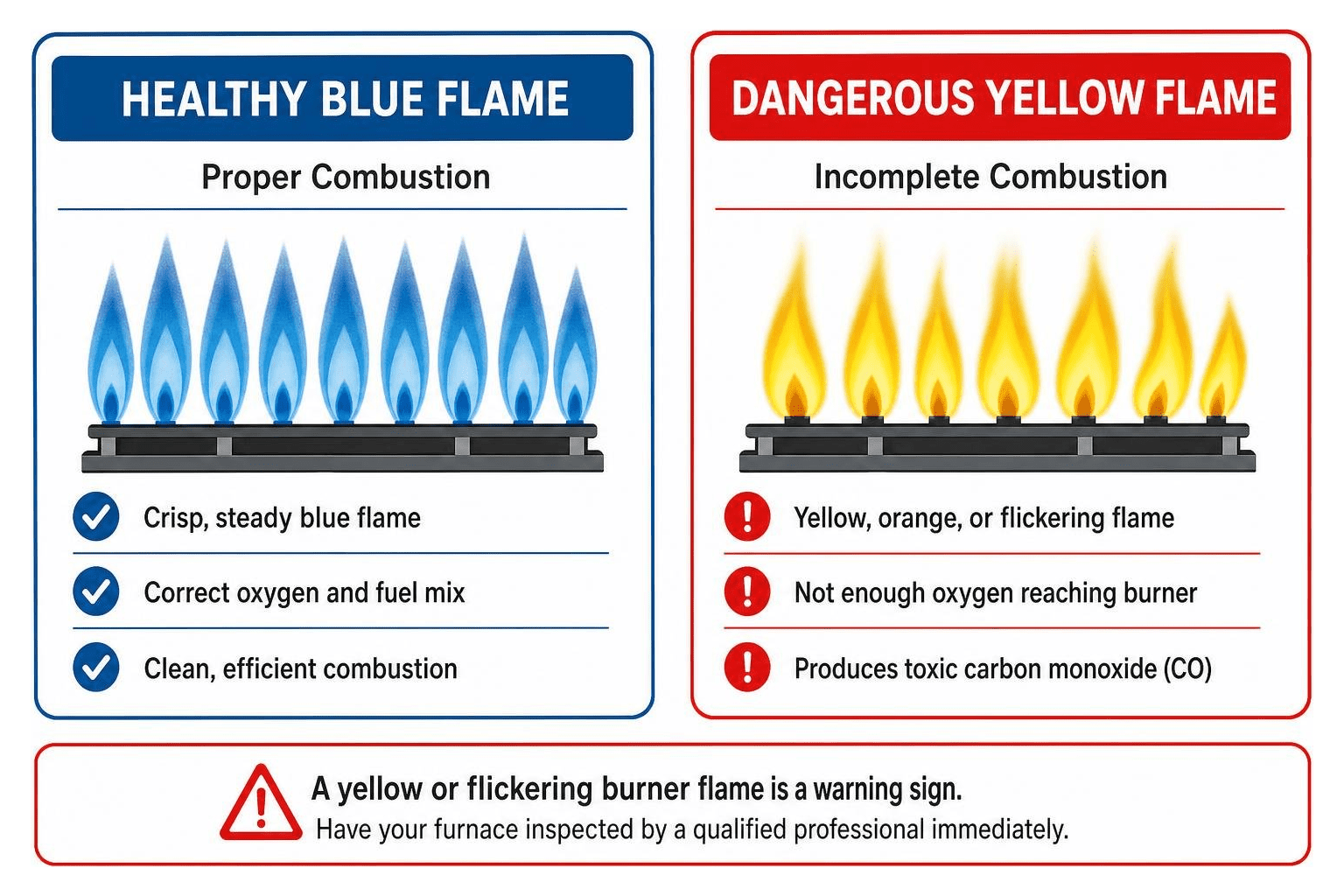
If the burner flame looks yellow, orange, or flickers unevenly, the burner is receiving too little oxygen. Incomplete combustion produces toxic carbon monoxide (CO) gas.
Carbon monoxide is invisible, odorless, and tasteless. Key warning signs of carbon monoxide hazards include:
- A yellow or flickering burner flame.
- Heavy soot marks around the furnace burner access doors.
- Excessive moisture forming on cold windows near the heating closet.
- Frequent, unexplained headaches, dizziness, nausea, or fatigue among family members.
To protect your home, install carbon monoxide detectors on every level of your house and test them monthly. If a detector sounds, evacuate right away.
How Central Ohio Winter Weather Impacts Heating Systems
Winter in Blacklick brings rapid temperature drops, damp cold, and biting winds off the plains. When outdoor temperatures drop into the single digits, your heating system operates under peak thermal stress.
Some Central Ohio homes use heat pumps, while others rely on natural gas or electric forced-air systems. Regardless of the system type, severe winter conditions can expose weak points in heating equipment.
Why Fast Furnace Repair Blacklick Response Matters in Freezing Temperatures
During sub-freezing weather, an unheated house loses indoor warmth quickly. Within hours of a furnace breakdown, indoor temperatures can drop below freezing, putting your plumbing at severe risk.
Frozen pipes can burst and cause thousands of dollars in water damage to drywall, flooring, and personal belongings. Fast emergency service prevents secondary property damage, protects vulnerable family members, and restores comfort before cold air settles into structural framing. When you require dependable furnace repair, Blacklick homeowners can count on our team to respond quickly.
The Cost of Delaying Necessary Heating Repairs
Ignoring minor furnace noises or small performance drops can turn simple fixes into major expenses. A worn blower capacitor, if neglected, forces the blower motor to pull excess electrical current until the motor burns out completely.
Delaying service can also drive up utility bills. When airflow is blocked or burners are dirty, a furnace runs longer cycles to deliver the same amount of heat. Our heating services can address minor issues before they lead to a costly breakdown. You can also explore our broader heating services for seasonal support.
Furnace Repair vs. Replacement: Making the Right Decision
Deciding whether to repair an aging furnace or replace it depends on its age, repair history, efficiency, and safety. A newer system with an isolated, affordable issue may be worth repairing, especially when regular furnace maintenance can help prevent repeat problems. An older furnace that breaks down often, heats unevenly, or needs a major component may be a better candidate for replacement. Our furnace installation services can help you compare reliable replacement options for your home.
Regular furnace maintenance can make that decision easier. During a tune-up, our team can check airflow, combustion, electrical components, and overall system condition, then identify smaller concerns before they lead to a winter breakdown. Maintenance also provides a clearer picture of whether the furnace can continue operating reliably or whether replacement planning makes more sense.
| Consideration Factor | Repair Existing Furnace | Replace with New System |
|---|---|---|
| System Age | Under 10 to 12 years old | 15 to 20+ years old |
| Repair Frequency | First repair in several seasons | Frequent, recurring breakdowns |
| Repair Cost Threshold | Less than 50% of replacement cost | Greater than 50% of replacement cost |
| Energy Efficiency (AFUE) | 80% AFUE or higher, steady bills | Low AFUE, rising monthly fuel costs |
| Comfort & Sizing | Heats evenly, holds temperature | Uneven heating, poor humidity control |
| Safety Concerns | Intact heat exchanger, stable flame | Cracked heat exchanger, gas leaks |
Evaluating Furnace Age and Frequency of Breakdowns
The average lifespan of a furnace in Central Ohio ranges between 15 and 20 years with regular maintenance. Without consistent care, systems often begin failing around year 10 or 12.
A dependable guideline is the half-cost rule: if a repair costs about half as much as a new heating system, or if the unit needs multiple repairs every winter, replacement may be the smarter long-term investment.
Furnace Efficiency Upgrades and Rebate Opportunities
Older furnaces often operate at Annual Fuel Utilization Efficiency (AFUE) ratings near 60% to 70%, meaning 30 to 40 cents of every fuel dollar escapes through the flue pipe. Modern high-efficiency furnaces achieve AFUE ratings of 95% to 98%.
Upgrading to a high-efficiency system provides notable benefits:
- Lower monthly heating bills throughout the winter.
- Quieter operation thanks to variable-speed blower fans.
- More consistent temperatures with fewer drafts.
- Improved indoor air quality and humidity balance.
Homeowners investing in high-efficiency heating systems may qualify for federal energy tax credits, local utility rebates, and manufacturer incentives that reduce total project costs. Our furnace installation team can help you choose the right system.
What to Expect During a Professional Heating Service Visit
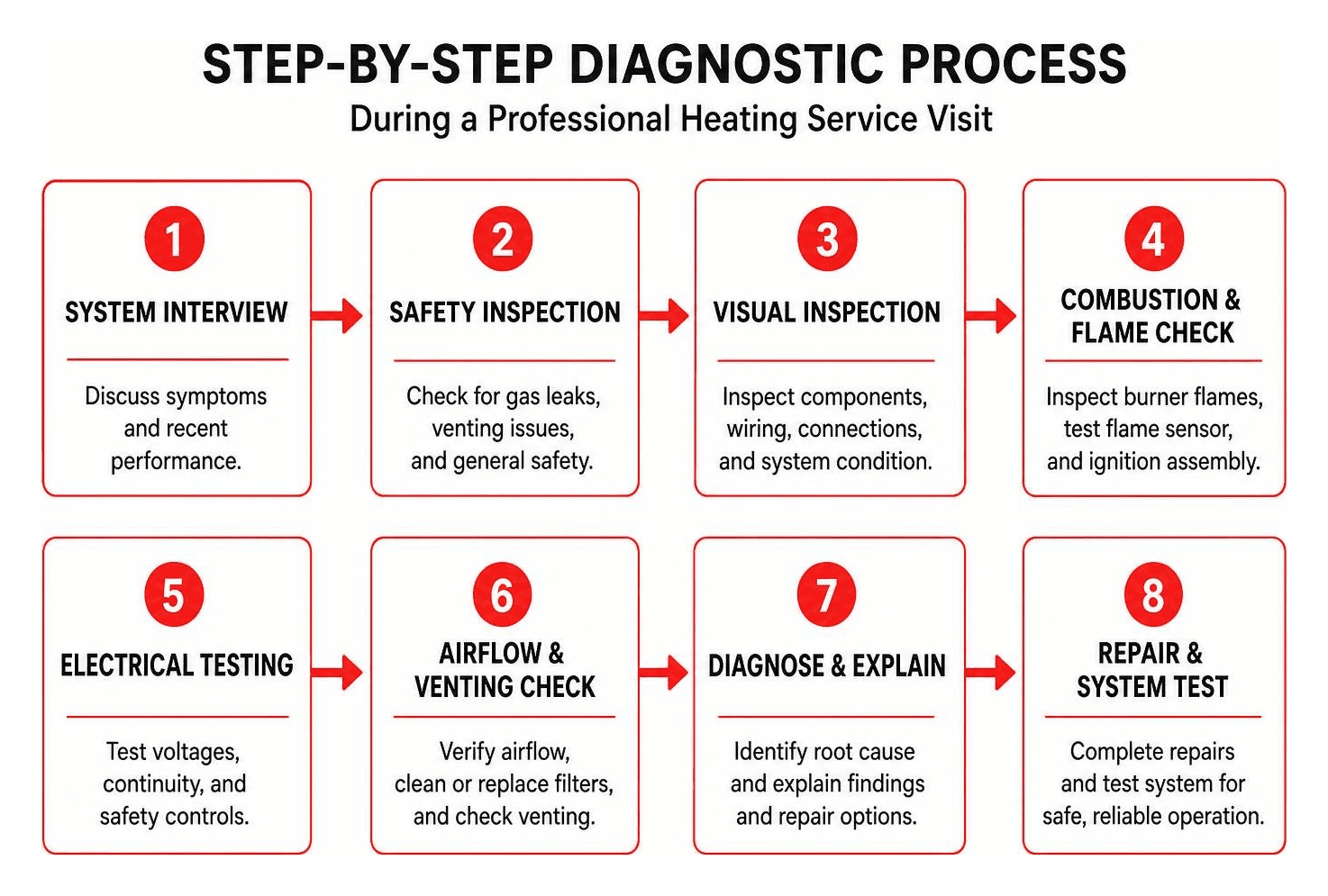
When our certified technicians arrive at your home, we focus on pinpointing the root cause of the breakdown rather than offering temporary patches. A typical furnace repair visit takes between one and two hours, depending on the complexity of the problem.
Diagnostic Checklist for Furnace Repair Blacklick Technicians
A thorough diagnostic visit follows a clear, multi-point evaluation to restore system performance and safety:
- Combustion and Flame Safety Check: We inspect the burner flames, test the flame sensor, and evaluate the electronic ignition assembly.
- Heat Exchanger Inspection: We check for hairline cracks, rust, and corrosion that could leak combustion gases into indoor living spaces.
- Electrical Testing: We test motor capacitors, measure voltage and amperage on electrical circuits, and tighten terminal connections.
- Airflow and Blower Evaluation: We inspect blower motor bearings, check the blower wheel for debris, and measure static pressure.
- Safety Switch and Venting Verification: We verify that high-limit switches, pressure switches, and flue exhaust piping operate properly.
- Thermostat Calibration: We ensure the thermostat sends clear signals to the control board for smooth cycling.
Routine Maintenance to Prevent Future Failures
Regular maintenance can improve your system’s efficiency by up to 15%. Annual fall tune-ups allow technicians to clean dirty burners, lubricate moving parts, and catch worn components before they break in deep winter.
Consistent annual service can help preserve manufacturer parts warranties and extend the operating lifespan of heating equipment. Our guide on why your HVAC system needs regular care explains how routine maintenance can help prevent avoidable problems.
Frequently Asked Questions About Furnace Repair
How often should a furnace be serviced in Central Ohio?
You should schedule professional furnace service once a year, ideally in late summer or early fall before the cold weather arrives. Annual maintenance cleans critical components, verifies safety switches, and catches small mechanical problems before you rely on the system daily.
How much does the average furnace repair cost in Blacklick?
The cost of a furnace repair depends on the specific component that has failed, the age of the unit, and whether emergency service is required. Minor issues like dirty flame sensors or clogged condensate lines cost far less to repair than major parts like blower motors, electronic control boards, or gas valves. A professional diagnostic visit gives you an accurate, upfront estimate before any work begins.
When is it better to replace a furnace instead of repairing it?
Replacement is usually the better choice if your furnace is over 15 years old, needs frequent repairs, or has a cracked heat exchanger. Upgrading to a modern high-efficiency unit lowers monthly heating bills and eliminates the hassle of unexpected winter breakdowns.
Conclusion
Keeping your home warm throughout a cold Central Ohio winter requires a dependable, properly maintained heating system. Whether you notice strange noises, cold air coming from your vents, or rising energy bills, taking care of warning signs early prevents emergency breakdowns.
For 75 years, Aire-Flo Heating, Cooling & Generators has provided trusted, top-rated service across Central Ohio with a 100% satisfaction guarantee. If your furnace is struggling to keep your family warm, contact our professional furnace repair technicians today.