

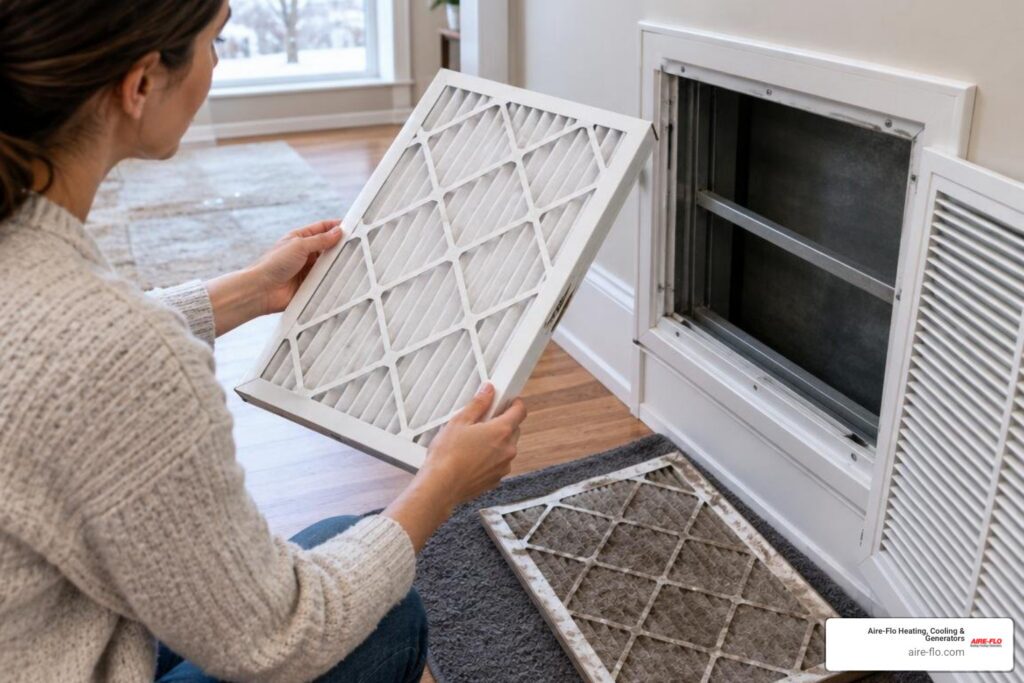
Heat Pump Not Heating? Start With These Checks
Air source heat pump servicing is a professional check of the system’s airflow, electrical parts, controls, and heating performance. If your heat pump is not heating, check the thermostat setting and air filter, then make sure leaves or snow are not blocking the outdoor unit. If it still blows cool air, makes unusual noises, or cannot keep your home warm, contact our team for service. Do not open the unit or attempt electrical or refrigerant repairs.
The team at Aire-Flo Heating, Cooling & Generators has seen how early service helps keep heat pumps reliable when Columbus temperatures drop. Professional attention to airflow, controls, and electrical components can help prevent avoidable heating problems.

Why Is Your Heat Pump Not Heating? Key Signs and Common Issues
An air source heat pump works by extracting heat energy from outdoor air and transferring it inside your home. Even during a chilly November 2026 morning in central Ohio, thermal energy exists in the ambient air. When a component fails or dirt restricts airflow, the entire heat transfer cycle breaks down.
Diagnostic troubleshooting often reveals simple airflow restrictions, such as clogged return air filters or packed debris around the exterior cabinet. However, mechanical problems can also stop heat output. A stuck reversing valve can trap the system in cooling mode. Electrical control failures can prevent the outdoor compressor from engaging, or low refrigerant pressures can stop the heat exchange completely.
Monitoring system behavior provides valuable clues. If you notice when heating cycles too frequently, your equipment is likely struggling with internal pressure imbalances, overheating, or airflow restrictions. A foul odor coming from the vents can indicate biological growth on indoor coils or scorched electrical wiring, which explains why heat pump smells when on.
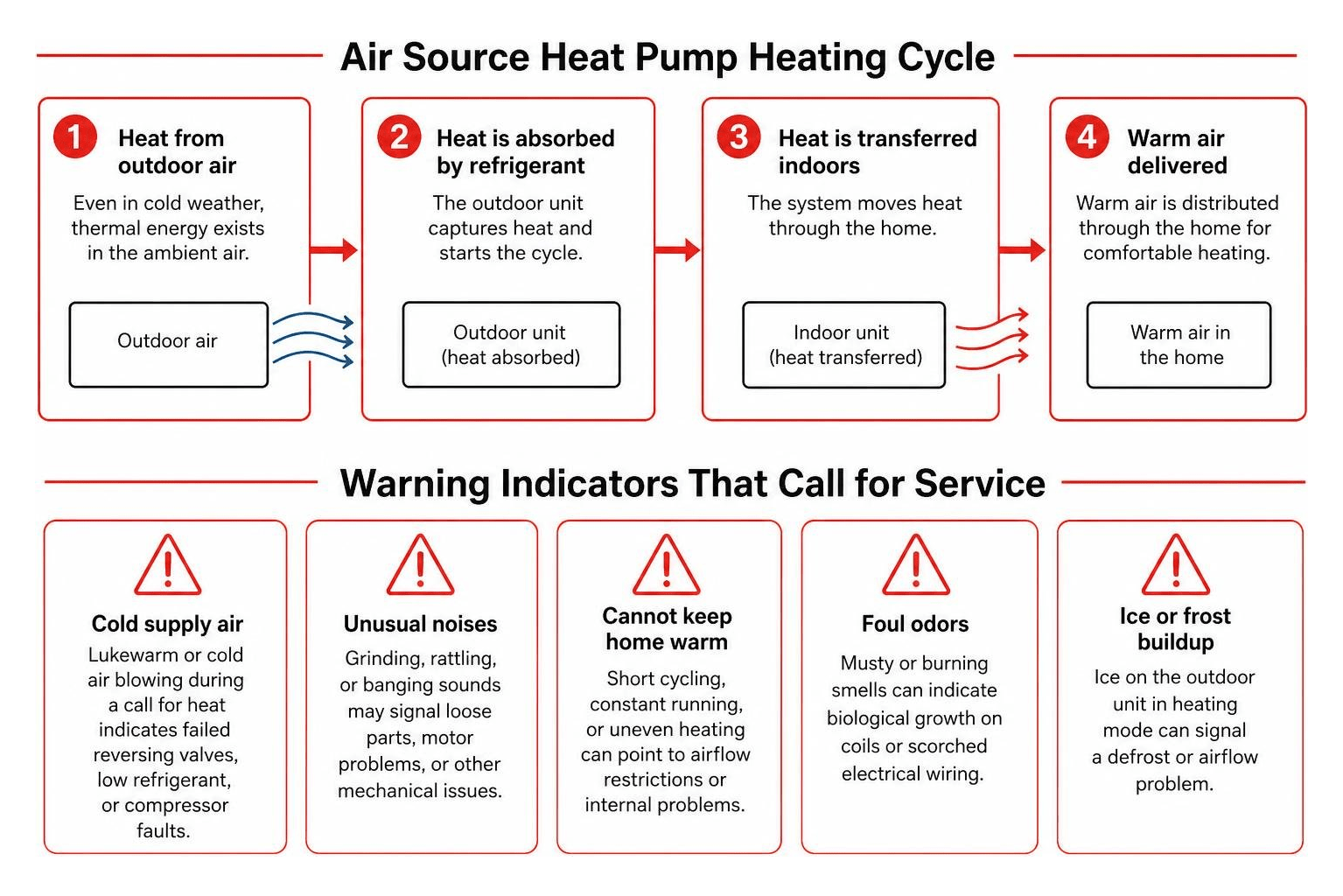
Critical Warning Signs Your System Needs Immediate Care
Catching equipment strain early prevents total winter heating breakdowns. Look out for these critical warning indicators:
- Cold supply air: Lukewarm or cold air blowing during a call for heat indicates failed reversing valves, low refrigerant, or compressor faults.
- Rattling, grinding, or buzzing noises: Loud mechanical sounds often point to loose hardware, failing motor bearings, or broken fan blades.
- Constant auxiliary heat operation: If your secondary electric heat strips run constantly, the main heat pump is not producing enough thermal energy on its own.
- Rapid short cycling: When the unit turns on and shuts off every few minutes, a professional should diagnose the cause before the compressor overheats.
- Sudden spikes in electricity bills: A heat pump running inefficiently draws excessive power to overcome dirty coils or low fluid pressures.
Common Faults Discovered During Diagnostics
During a professional diagnostic visit, our technicians frequently discover underlying mechanical and electrical defects that remain invisible to the naked eye. Low refrigerant charge is a frequent culprit, caused by tiny micro-cracks in copper tubing or flare joints. Recognizing AC refrigerant leak warning signs and why topping off hurts is critical, as simply adding fluid without fixing the leak damages the compressor over time.
Other common diagnostic discoveries include:
- Weak start and run capacitors: Aging electrical capacitors lose their capacitance rating, causing hard starts that strain the compressor motor.
- Corroded contactors and loose wiring: Electrical connections loosen through seasonal vibration, leading to arcing and sudden loss of power.
- Faulty defrost controls: A stuck defrost board or broken ambient temperature sensor allows thick ice to build up on outdoor coils, choking off airflow.
- Thermostat calibration drift: Defective sensors cause incorrect temperature readings, preventing the unit from engaging heating stages appropriately.
What Professional Air Source Heat Pump Servicing Includes and Why It Matters
Preventative maintenance goes far beyond a quick visual check. Heat pumps operate year-round, delivering summer cooling and winter warmth. This continuous operation places significant wear on mechanical assemblies, electrical components, and thermal coils. Regular maintenance protects the seasonal coefficient of performance (SCOP), preserves manufacturer warranties, and prevents premature equipment breakdown.
Professional servicing ensures your heating equipment delivers maximum comfort with minimal power draw. For Ohio-specific maintenance considerations, this local breakdown of heat pump service and maintenance explains what homeowners can expect.
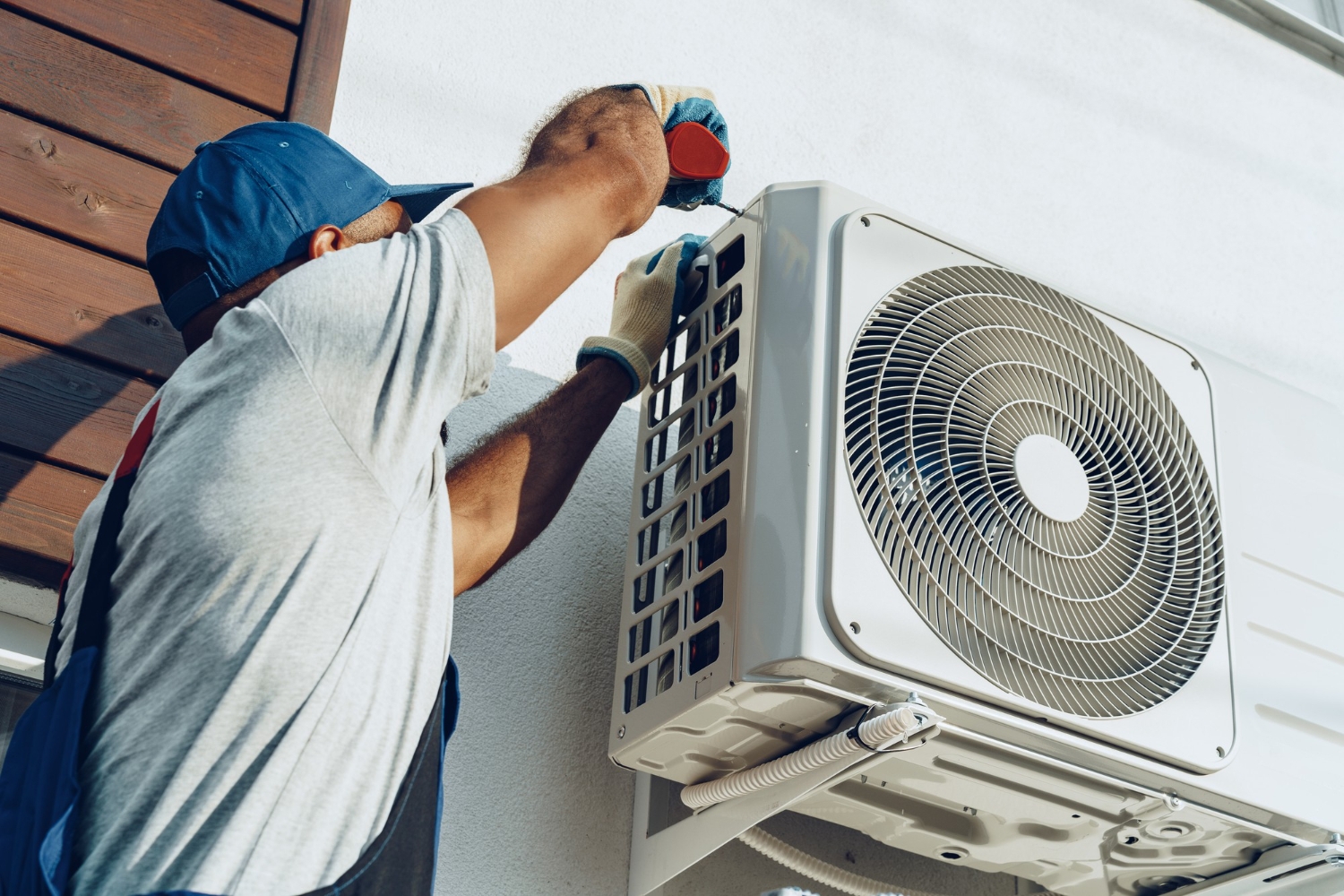
Comprehensive Checklist for Air Source Heat Pump Servicing
When our certified technicians perform preventative maintenance on your heat pump, we follow a detailed inspection protocol designed to optimize safety, longevity, and efficiency. A proper service visit typically takes two to three hours.
Our comprehensive visit includes:
- Electrical safety inspection: Testing operating voltages, tightening electrical lugs, checking wire insulation, and measuring amp draws on all fan motors and compressors.
- Coil cleaning and fin straightening: Removing dirt, pollen, and debris from outdoor and indoor coils using specialized cleaners, followed by realigning bent aluminum fins to restore unrestricted airflow.
- Refrigerant pressure and temperature verification: Measuring subcooling and superheat levels to confirm proper charge and ensure the system operates within manufacturer parameters.
- Defrost cycle testing: Forcing a manual defrost cycle to verify sensor response, reversing valve operation, and drain pan heating elements.
- Condensate drain line flushing: Clearing algae, sediment, and moisture traps to prevent indoor drain overflows and water damage.
- Blower assembly maintenance: Inspecting the indoor blower wheel, cleaning housing assemblies, and checking motor bearings.
- Control and thermostat calibration: Testing communication protocols, temperature sensors, emergency heat lockouts, and stage sequencing.
Our comprehensive heating services ensure that every mechanical, electrical, and thermal subsystem operates safely and efficiently before harsh winter weather arrives.
Environmental Impact, Efficiency, and Equipment Lifespan
A well-maintained air source heat pump can deliver up to three times more heat energy than the electrical energy it consumes. Because modern units achieve a seasonal performance factor of 3.1 or higher, keeping coils clean and pressures calibrated directly minimizes your home’s carbon footprint.
When dirt accumulates on coils or refrigerant levels drop, the compressor must work harder and run longer cycles. This excess strain leads to thermal fatigue, electrical breakdown, and premature equipment failure. While an unmaintained heat pump may fail in under a decade, regular maintenance allows a quality system to operate smoothly for 20 to 25 years. This longevity conserves manufacturing resources and reduces equipment waste.
Air Source Heat Pump Servicing Costs, Plans, and DIY Limits
Routine maintenance is an investment that prevents costly emergency breakdowns. Emergency repairs, such as replacing a seized compressor or fixing severe electrical burnouts, carry significant labor and component expenses. Regular tune-ups allow technicians to identify weak capacitors, minor leaks, and worn contacts before they cause complete system failure.
Homeowners weighing long-term upkeep strategies can use AC repair vs. maintenance: a Dublin homeowner’s guide to compare proactive care with reactive repairs.
The table below highlights the differences between scheduling one-off service appointments and enrolling in an ongoing maintenance program.
| Feature / Benefit | One-Off Servicing Visit | Annual Maintenance Service Plan |
|---|---|---|
| Scheduling Convenience | Homeowner must remember to book yearly | Automated annual scheduling reminders |
| System Inspection Depth | Complete multi-point seasonal check | Complete multi-point seasonal check |
| Warranty Compliance | Proof of service for current year only | Continuous digital service history log |
| Emergency Repair Discounts | Standard diagnostic and repair pricing | Discounted rates on labor, parts, and repairs |
| Emergency Response Priority | Standard queue during peak demand | Priority scheduling during extreme weather |
| Payment Flexibility | Single upfront payment per visit | Predictable, budget-friendly payment terms |
Evaluating One-Off Visits vs. Ongoing Air Source Heat Pump Servicing Plans
Choosing between individual tune-ups and scheduled service plans comes down to convenience, budget predictability, and long-term protection. Single appointments provide a quick solution if your unit has missed a season of maintenance. However, structured programs offer significant advantages.
Signing up for dedicated service agreements ensures you never forget an annual inspection. These plans provide ongoing digital service records, which protect manufacturer warranty claims if major components fail. Members also receive priority response times during peak heating and cooling seasons, ensuring faster help during unexpected winter cold snaps.
DIY Upkeep vs. Licensed Professional Requirements
While regular professional maintenance is required, homeowners can perform basic upkeep between scheduled visits to support system efficiency.
Safe DIY Tasks:
- Inspecting and replacing indoor air filters every 30 to 90 days.
- Keeping a clear 2 to 3 foot perimeter around the outdoor unit by clearing away fallen leaves, tall grass, weeds, and heavy snow drifts.
- Gently spraying the exterior cabinet with a low-pressure garden hose to remove loose surface dirt.
- Checking thermostat batteries and confirming scheduled heating programs.
Tasks Requiring Licensed Technicians:
- Handling, recovering, or adding chemical refrigerants, which require EPA Section 608 certification.
- Testing high-voltage electrical panels, contactors, relays, and capacitors.
- Disassembling the cabinet to access high-pressure refrigerant tubing and reversing valves.
- Adjusting internal gas pressure regulators or high-limit safety controls on hybrid systems.
High-voltage electrical wiring and pressurized refrigerant circuits present serious safety hazards. To keep your system running safely, always trust licensed HVAC pros for home comfort with technical repairs and internal component servicing.
How to Prepare and Choose the Right Service Engineer
Scheduling maintenance before extreme weather sets in ensures your system is ready for winter. Early autumn is the best time to book heating maintenance across Columbus, Upper Arlington, Worthington, and surrounding communities.
To make the service visit as efficient as possible, complete these simple preparation steps:
- Clear workspace access: Ensure the technician has an unobstructed path to both the outdoor heat pump cabinet and the indoor air handler or furnace.
- Document unusual behavior: Write down any odd noises, error codes shown on the thermostat, or rooms that struggle to stay warm.
- Gather past documentation: Have your equipment model numbers, installation date, and past service receipts ready for review.
- Secure household pets: Keep pets safely indoors away from open gates and working electrical panels.
When choosing a service provider, verify that the company is licensed, bonded, insured, and certified to service modern heat pump systems. The guide to working with Columbus HVAC contractors offers practical advice for choosing qualified service professionals who stand behind their work.
Frequently Asked Questions about Heat Pump Servicing
How often should an air source heat pump be serviced?
An air source heat pump should receive a professional service once every twelve months. Because heat pumps run year-round for both heating and cooling, annual maintenance is essential to keep components running smoothly, maximize energy efficiency, and maintain active manufacturer warranties.
How long does a professional heat pump service take?
A thorough domestic heat pump service typically takes between two and three hours. This timeframe allows the technician to clean the outdoor and indoor coils, inspect electrical contacts, measure operating voltages, verify refrigerant levels, flush condensate lines, and test the defrost cycle.
What should I do if my heat pump is blowing cold air in heating mode?
First, verify that your thermostat is set to “Heat” and that the target temperature is higher than the current room temperature. Check whether the outdoor unit has entered its temporary defrost mode, which can cause supply air to feel slightly cooler for a few minutes. If the air remains cold, the filter is clean, and the outdoor unit is running constantly, switch your thermostat to “Emergency Heat” and contact a certified technician to diagnose the issue.
Conclusion
A reliable heating system is essential for keeping your home safe and comfortable through chilly Ohio winters. Regular servicing protects your equipment against premature wear, lowers utility bills, and preserves long-term heating performance.
At Aire-Flo Heating, Cooling & Generators, our team brings 75 years of trusted experience to every service call across the greater Columbus area. Whether your heat pump needs an annual tune-up or prompt diagnostic repair, contact our professional heat pump service technicians to schedule service.