

Why Generator Installation in Bexley, OH Is Worth Planning Ahead
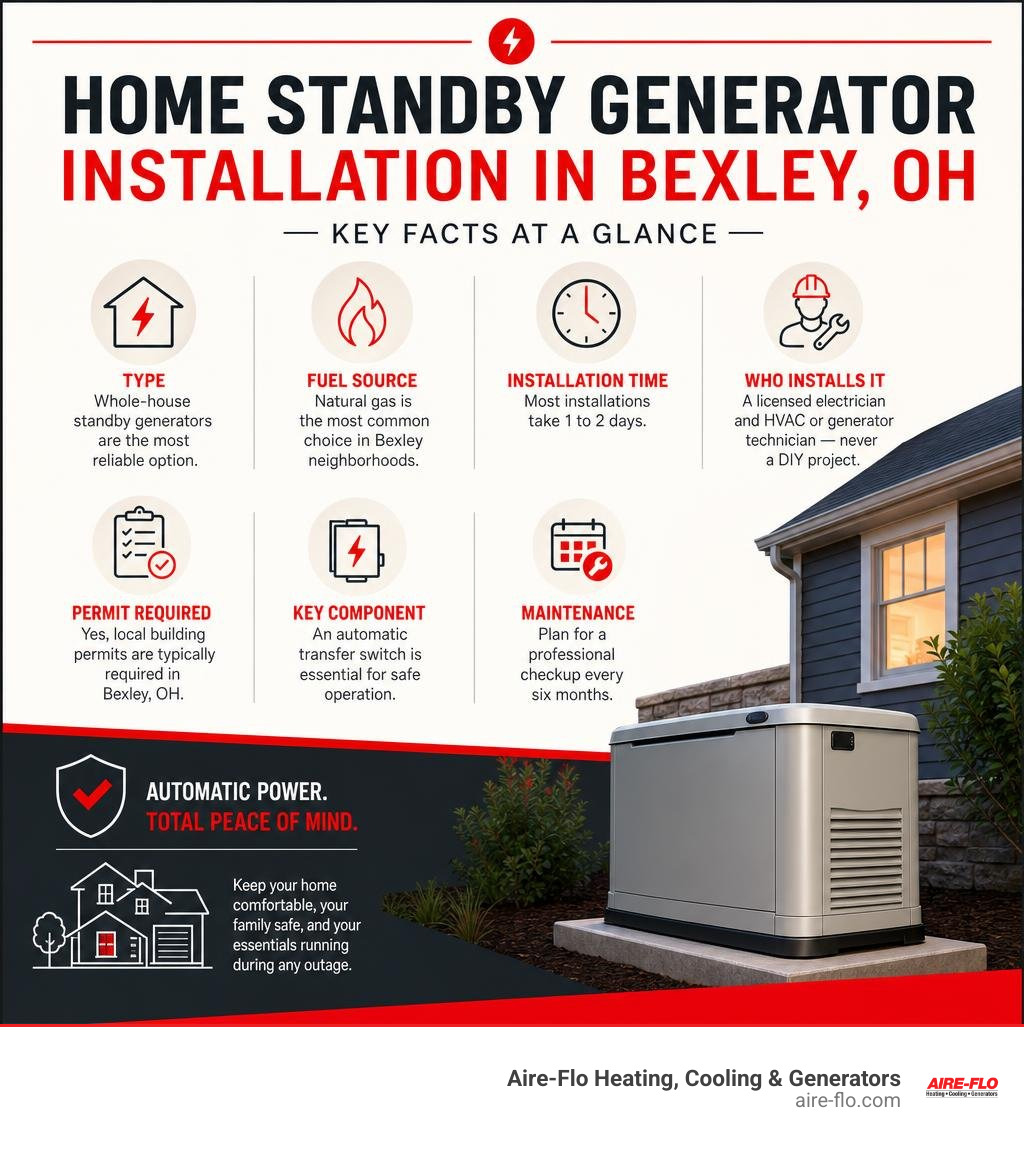
If you’re considering generator installation in Bexley, here’s a quick overview of what you need to know:
- Type: Whole-house standby generators are the most reliable option for Bexley homeowners
- Fuel source: Natural gas is the most common choice in suburban Columbus neighborhoods
- Installation time: Most installations take 1 to 2 days
- Who installs it: A licensed electrician and HVAC or generator technician, and it is never a DIY project
- Permit required: Yes, local building permits are typically required in Bexley, OH
- Key component: An automatic transfer switch is essential for safe operation
- Maintenance: Plan for a professional checkup every six months
Bexley sits squarely in Central Ohio’s storm corridor, where severe thunderstorms, ice storms, and heavy snowfall can knock out power for hours or even days at a time. For families with young children, elderly relatives, or anyone who works from home, a multi-day outage is not just inconvenient; it can create real safety concerns. That’s why more Bexley homeowners are investing in whole-house standby generators as a permanent power backup solution.
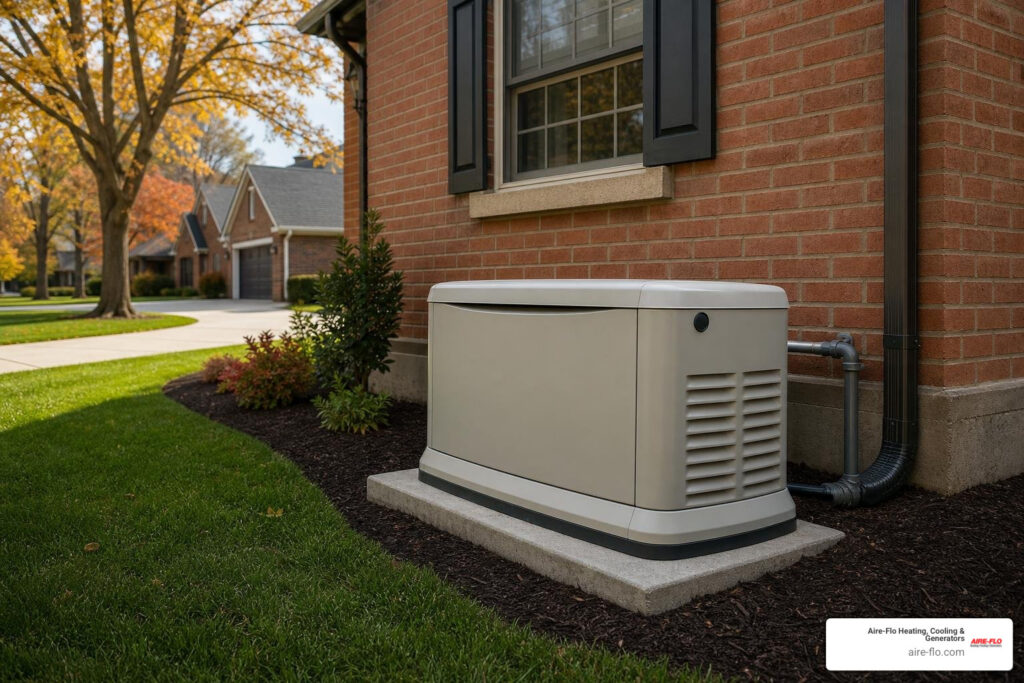
Unlike a portable generator you drag out of the garage, a standby generator sits outside your home, connects directly to your natural gas line, and starts automatically within seconds of detecting a power loss. No extension cords. No manual startup. No carbon monoxide risk indoors.
Our team at Aire-Flo Heating, Cooling & Generators has spent decades helping Central Ohio homeowners navigate generator installation in Bexley and the surrounding Columbus area. In this guide, we will walk you through everything you need to know before you get started.
Benefits of a Whole-House Generator in Bexley
When severe weather rolls through Central Ohio, our local electrical grid faces immense pressure. High winds can bring down mature trees on historic Bexley streets, snapping power lines and leaving entire neighborhoods in the dark.
Investing in a whole-house standby generator provides immediate peace of mind. Instead of hunting for flashlights, dragging heavy equipment out of the garage, and running extension cords in the rain, you can relax. A standby unit keeps your lights on, your security system active, and your family safe.
Food preservation is another major advantage. A prolonged outage can spoil groceries in your refrigerator and freezer. A standby generator keeps these appliances running continuously, preventing food waste and saving you from costly replacements.
For homeowners on our Bexley city page, maintaining indoor climate control is also a matter of safety. Summer heatwaves can make a home stifling within hours, while winter ice storms can freeze your pipes. By maintaining power to your furnace and air conditioner, you protect your home from mold, frozen plumbing, and extreme temperatures.
A whole-house generator also works closely with the comfort systems you already rely on. If you need help planning backup power for your heating and cooling equipment, our generator installation services can help you choose a setup that supports your home’s most important circuits.
Choosing and Sizing Your Generator
Selecting the right backup power system requires an understanding of how these units operate. Standby generators connect directly to your home electrical panel and use an automatic transfer switch to monitor incoming utility power. Our blog post about how backup generators work explains how the generator, transfer switch, and electrical panel work together when utility power goes out.
You must also choose the right fuel source. Most homeowners in our service area choose natural gas because it connects directly to the existing utility line, providing an unlimited fuel supply during an outage. If natural gas is unavailable, liquid propane is an excellent alternative. We store propane in a dedicated tank on your property, which provides a clean, reliable, and highly efficient fuel source. Our blog post about choosing the right generator breaks down fuel options, generator types, and household power needs in more detail.
Sizing Your System for Generator Installation Bexley
Choosing the correct generator size is critical. If you select a unit that is too small, it will overload, trip its circuit breakers, or even suffer permanent damage when your heavy appliances kick on.
We determine the correct size by calculating your home electrical load. We look at both running wattage, which is the electricity needed to keep appliances operating, and starting wattage, which is the extra surge of power required to start motorized appliances like your central air conditioner or sump pump.
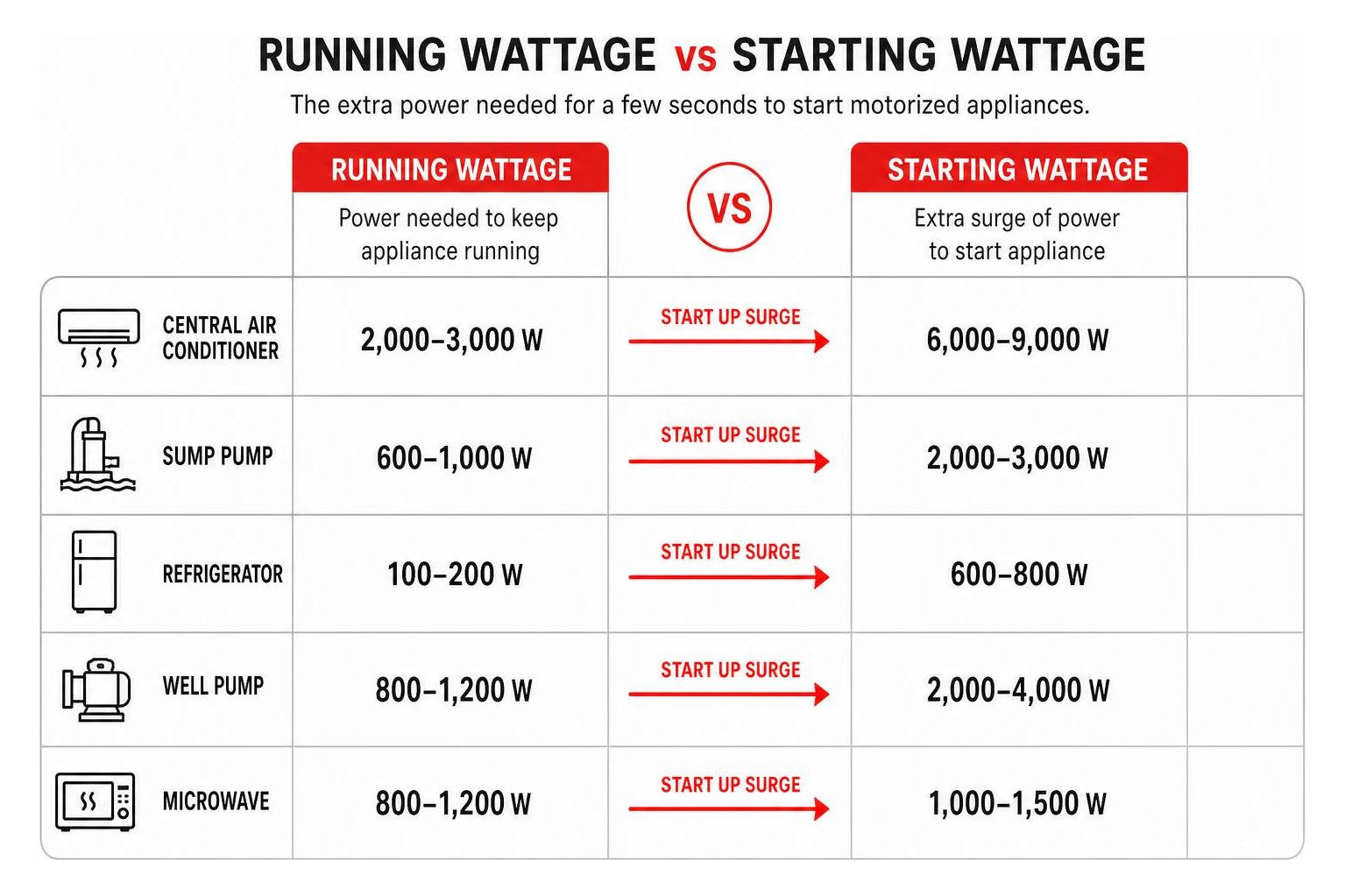
To help you understand how different generator capacities meet various household needs, we have put together this comparison table:
| Generator Capacity | Typical Household Systems Powered | Best Suited For |
|---|---|---|
| 7 kW to 10 kW | Sump pump, refrigerator, microwave, select lights, and wall outlets | Target backup for essential safety and food preservation |
| 12 kW to 16 kW | Sump pump, refrigerator, lights, heating system, and a small central AC unit | Managed whole-house backup for moderate homes |
| 20 kW to 26 kW | Large central AC, heating system, electric water heater, sump pump, and all standard home appliances | Complete whole-house backup for larger suburban homes |
The Professional Generator Installation Bexley Process
A successful installation requires careful planning, technical expertise, and precise coordination. Because standby units integrate directly with your electrical panel and your municipal gas line, the job requires licensed professionals.
Our team at Aire-Flo Heating, Cooling & Generators handles every step of our generator installation services. First, we conduct a detailed site assessment to find the optimal location for your unit. We look for a spot that is close to your gas meter and electrical panel, well-ventilated, and compliant with local property line setbacks.
Next, we prepare the site and pour a solid concrete pad to support the heavy generator unit. Once the pad cures, we secure the generator and begin the electrical integration. We install the automatic transfer switch next to your main electrical panel, routing the necessary circuits to ensure seamless power delivery. Finally, we run a dedicated gas line from your meter to the generator, pressure-test the system, and perform a complete simulation to verify that everything works perfectly.
What to Expect During Generator Installation Bexley
We want you to feel completely prepared for installation day. The physical installation of the generator unit, electrical wiring, and gas lines typically takes one to two days. However, the entire planning and preparation phase takes longer because we must coordinate with local municipal offices.
Before we can begin any physical work, we secure the necessary building, electrical, and plumbing permits from the local building department. We also coordinate directly with your gas utility provider, as some homes require a gas meter upgrade to handle the increased fuel demand of a standby generator.
Our team manages these details so you do not have to worry about paperwork or scheduling inspections. During a planned installation, our blog post about what to expect during generator installation can help you understand the site preparation, utility coordination, startup testing, and homeowner walkthrough. For larger homes that need more complete backup coverage, our blog post about whole-house backup power explains how standby systems support major appliances and comfort equipment during longer outages.
Safety, Permits, and Maintenance
Safety is our top priority during any electrical or gas line project. One of the greatest risks of improper generator installation is back-feeding. This dangerous condition occurs when a generator sends electricity backward through your home electrical panel and out into the main utility lines, which can injure or kill utility workers trying to restore power. The American Red Cross emphasizes the importance of proper installation and safety protocols to prevent these hazards.
To prevent back-feeding, we install an automatic transfer switch. This critical safety device physically isolates your home from the utility grid before allowing generator power to flow into your electrical panel.
Local building codes and zoning laws also dictate where and how we can install standby units. Bexley has specific rules regarding property line setbacks, noise levels, and exhaust ventilation. Our team knows these local regulations, which helps keep your system fully compliant.
Once your generator is up and running, regular maintenance is essential to keep it reliable. We recommend scheduling professional maintenance every six months. During these visits, we change the oil, replace the spark plugs, check the battery, and test the entire system under load. To keep your unit in peak condition, our generator repair services can help with routine service, diagnostics, and repairs before storm season puts extra demand on your equipment.
Frequently Asked Questions About Home Generators
Can I plug my generator directly into my house?
No. You must never plug a generator directly into a standard wall outlet. Doing so causes back-feeding, which poses a severe electrocution hazard to utility workers and your neighbors. It can also bypass your home circuit breakers, creating a serious risk of electrical fire. You must always use a professionally installed automatic transfer switch to connect a generator to your home.
Can you run a natural gas generator constantly all day?
Yes, a natural gas generator can run continuously for days because it has an unlimited fuel supply from your utility line. However, you should not run it indefinitely without pause. During an extended outage, you must shut the generator down periodically to check the oil level, top off the fluids, and allow the engine to cool.
What happens if my whole-house generator is too small for my AC?
If your generator capacity is too small to handle the starting load of your central air conditioner, the system will overload. This will cause the generator circuit breaker to trip, shutting down power to your entire home. Over time, these frequent overloads can damage the sensitive compressor in your air conditioner and shorten the lifespan of your generator.
Conclusion
Investing in a standby generator is the best way to protect your home, your family, and your daily comfort from unpredictable Ohio weather. At Aire-Flo Heating, Cooling & Generators, we bring 75 years of trusted service to every project. We back our work with a 100% satisfaction guarantee, giving you complete confidence that your backup power system will perform flawlessly when you need it most.
If you are ready to secure your home against future power outages, contact our generator installation specialists today to schedule your free consultation.