

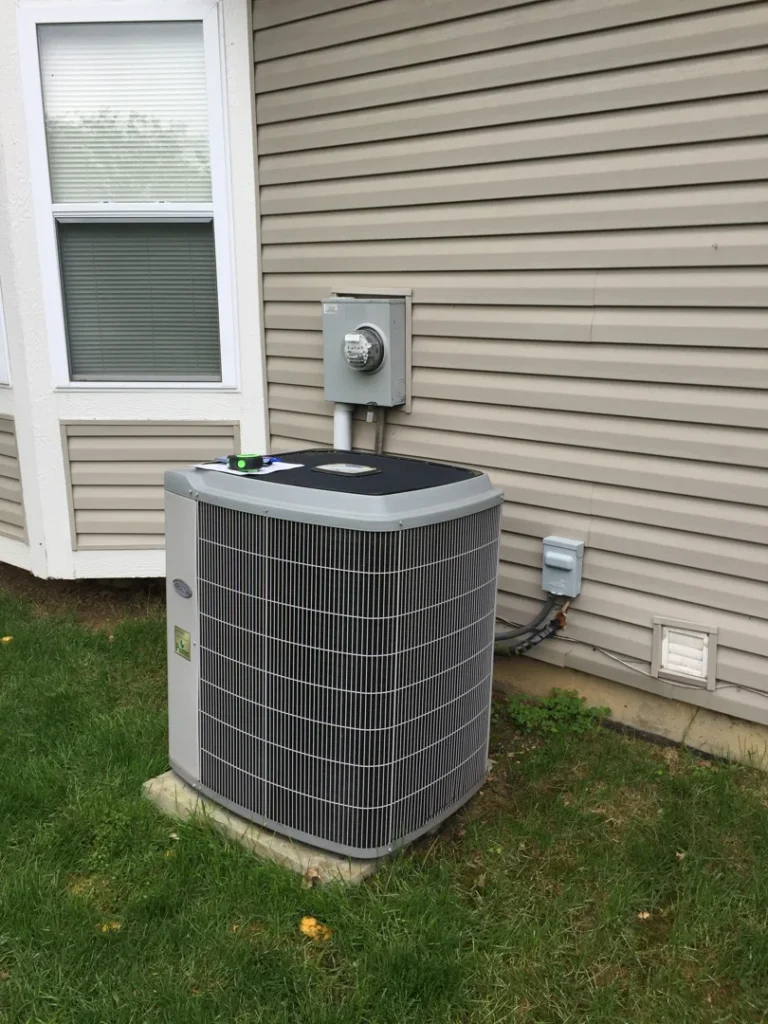
What Your AC Is Trying to Tell You With That Loud Noise
An AC making loud noise is one of the most common reasons Columbus homeowners call an HVAC technician, especially when summer temperatures climb and the system runs around the clock.
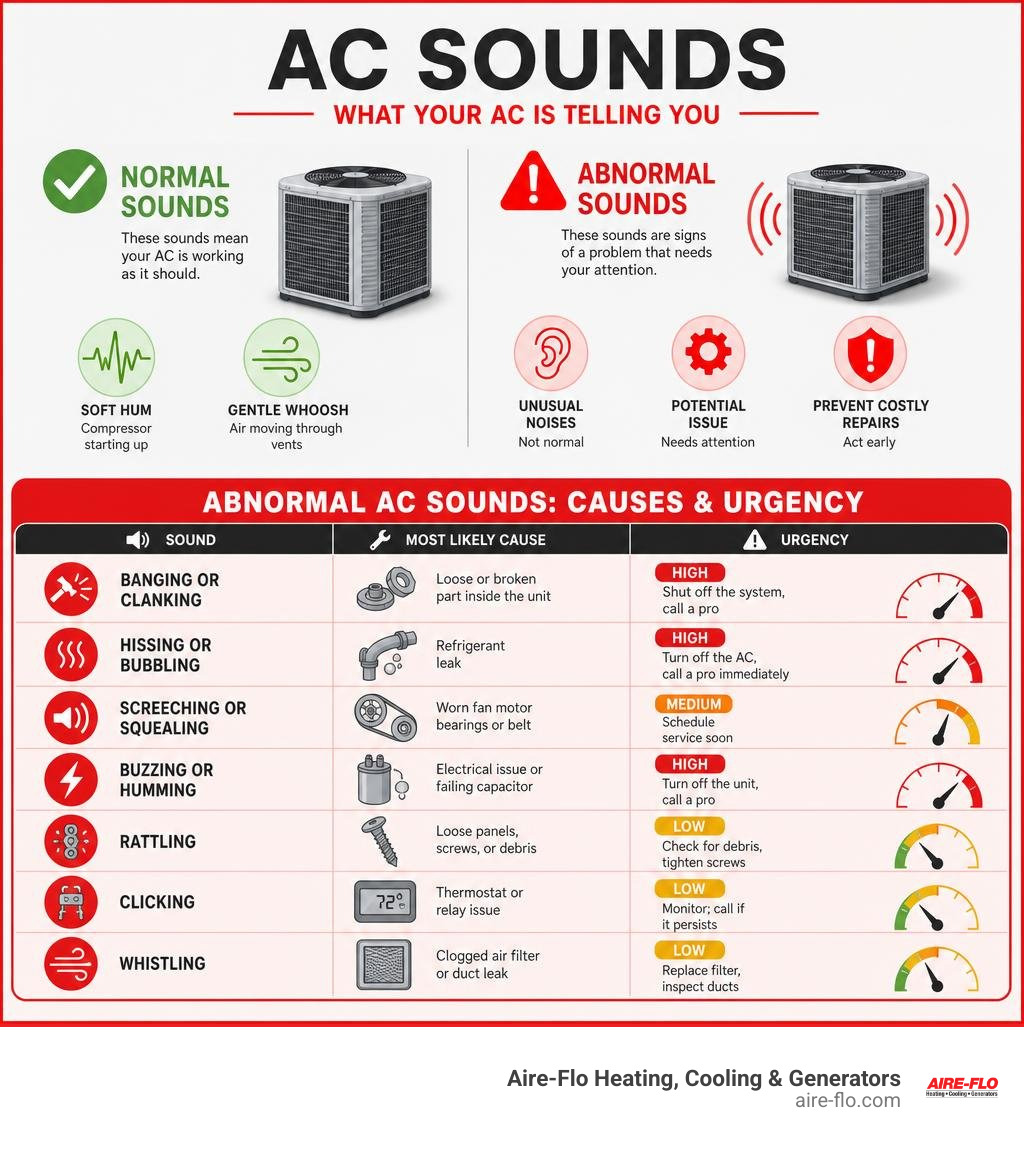
Here is a quick breakdown of the most common sounds and what they mean:
| Sound | Most Likely Cause | What to Do |
|---|---|---|
| Banging or clanking | Loose or broken part inside the unit | Shut off the system, call a pro |
| Hissing or bubbling | Refrigerant leak | Turn off the AC, call a pro immediately |
| Screeching or squealing | Worn fan motor bearings or belt | Schedule service soon |
| Buzzing or humming | Electrical issue or failing capacitor | Turn off the unit, call a pro |
| Rattling | Loose panels, screws, or debris | Check for debris, tighten screws |
| Clicking | Thermostat or relay issue | Monitor; call if it persists |
| Whistling | Clogged air filter or duct leak | Replace filter, inspect ducts |
Some sounds are completely normal. Others are early warnings of a problem that will get worse, and more expensive, if you ignore it.
Modern air conditioners are engineered to run quietly. Many newer variable-speed units operate at just 19 dB indoors, which is quieter than a whisper. So when your system suddenly sounds like it is shaking the walls, something is off.
The good news is that most noise issues have a clear cause. Many can be caught early before a small problem turns into a costly repair or full system replacement.
At Aire-Flo Heating, Cooling & Generators, our team has diagnosed AC making loud noise issues across Central Ohio for decades. The sound your system makes is almost always a clue worth paying attention to. In this guide, we will walk through every major AC noise type, what causes it, and exactly what you should do next.
Normal vs. Abnormal Air Conditioner Sounds
Your air conditioning system is a complex machine. It relies on motors, fans, relays, and pressurized refrigerant to keep your home cool. Because of all these moving parts, you should expect some level of noise when the system runs.
A gentle hum when the compressor starts up is completely normal. You should also hear the steady, soft whoosh of air moving through your supply and return vents.
If you have a modern ductless or variable-speed system, you might hear a very quiet swishing sound. This is just the bearing operating at low speed. It often seems louder at night simply because your house is quieter.
You might also hear a sudden snap or clicking sound shortly after the system turns on or off. This is usually just the plastic housing expanding or contracting as the temperature changes. It is a harmless physical reaction, much like the ticking sounds an older television makes when you turn it off.
Additionally, the indoor unit has a relay switch that may click occasionally. In some systems, this relay activates every two hours to preheat the outdoor unit. You might also hear a brief gurgling or dripping sound as the drain pump runs or as refrigerant moves through the coils.
However, when a sound becomes loud, sharp, or continuous, it crosses the line into abnormal territory. If you hear a rhythmic hitting sound from the indoor unit, the fan is likely striking the casing. If you hear a high-frequency beeping or a loud, constant rattling, your system is telling you that a component is failing.
Learning to separate everyday operational noises from warning signs is your first line of defense. If you want to understand other household system issues, our article on how to troubleshoot common HVAC problems explains how airflow, electrical, and comfort problems often show up before a full breakdown.
Why Is Your AC Making Loud Noise?
When your air conditioner begins to make a disruptive sound, it is usually pointing to a specific mechanical or electrical fault. Ignoring these sounds can quickly decrease your system’s operating efficiency, raise your monthly energy bills, and lead to major component failure.
To help you quickly identify what is happening inside your system, we have put together a diagnostic overview of the most common noises:
| Sound | Potential Source | Urgency Level | Recommended Action |
|---|---|---|---|
| Heavy banging | Compressor piston or loose blower wheel | High | Shut off system immediately and call for repair |
| Squealing | Worn fan belt or dry motor bearings | Medium | Schedule a professional inspection within 24 hours |
| Hissing | Pressurized refrigerant leak | High | Turn off system and call an EPA-certified technician |
| Loud buzzing | Failing capacitor or loose electrical wiring | High | Turn off power at the breaker and call a professional |
| Constant rattling | Loose casing screws or outdoor debris | Low | Clean debris and tighten loose exterior panels |
By matching the sound to the correct component, you can save yourself a lot of time and worry. When a noise points to a mechanical or electrical failure, professional AC repair can help prevent the issue from spreading to more expensive parts of the system.
Banging and Clanking: Compressor and Blower Issues
If you hear a heavy banging or clanking sound, you must act quickly. This sound usually indicates that a mechanical part has come loose or broken entirely inside a sealed component.
If the sound comes from your outdoor unit, a connecting rod, piston, or crankshaft inside the compressor may have broken. Because the compressor is a hermetically sealed unit, a loose internal part usually means you will need to replace the entire compressor.
If the clanking is coming from your indoor unit, the blower wheel may have come loose from its motor shaft. As the wheel spins, it will strike the blower housing, creating a loud, rhythmic clanking sound.
Broken motor mounts can also cause the entire blower assembly to drop, causing the spinning fan blades to smash against the surrounding metal. If you hear these heavy, metallic impacts, turn off your system immediately. Running the system with loose internal parts will cause severe, irreversible damage to surrounding components. Many of these problems start small, and our article on the causes of common AC problems explains how worn parts, restricted airflow, and neglected maintenance can lead to bigger failures.
Screeching and Squealing: Fan Motor and Belt Problems
A high-pitched screech or squeal is a classic sign of a mechanical friction problem. In older air conditioning systems, a rubber V-belt drives the blower fan. Over time, this belt dries out, cracks, and begins to slip on the metal pulleys, creating a loud squealing sound.
In newer systems that use direct-drive motors, screeching usually points to worn fan motor bearings. If the bearings lose their lubrication, the metal parts will grind against each other.
If you ignore a squealing bearing, the motor will eventually overheat and seize up entirely. This can turn a relatively simple bearing or motor replacement into a much larger, more expensive repair.
Hissing and Bubbling: Refrigerant Leaks
A persistent hissing or whistling sound often points to a refrigerant leak. Your air conditioner keeps refrigerant under high pressure. If a tiny hole or crack develops in the copper coils due to corrosion or physical damage, the pressurized gas will hiss as it escapes.
If the leak is particularly large, you might also hear a bubbling or gurgling sound as air enters the refrigerant lines. When refrigerant leaks out, your system loses its ability to transfer heat. This causes your energy bills to spike, weakens the airflow coming from your vents, and often causes the indoor evaporator coils to freeze over.
Refrigerant leaks are also environmental hazards and can cause health issues like headaches or nausea if they occur indoors. If you suspect a leak, do not ignore it. A timely AC tune-up can also help your technician catch early signs of wear, leaks, airflow restrictions, and loose components before they turn into louder or more serious AC problems.
Indoor AC Making Loud Noise: Blower and Ductwork Sounds
When the indoor unit makes unusual sounds, the issue is often related to the blower assembly or the ductwork. If you hear a loud whistling or whining sound, your system is likely starving for air.
A heavily clogged air filter or blocked return vents often cause this restriction. When the blower fan tries to pull air through a restricted space, it creates a high-pressure whistling sound, much like a whistling kettle.
Loose ductwork can also cause problems. When the blower turns on, the sudden change in air pressure can cause thin sheet metal ducts to pop, rumble, or creak.
If you hear a loud rumbling or vibrating sound from the indoor unit, a heavy buildup of dust and dirt on the blades may throw the blower wheel out of balance. Unusual sounds can also show up alongside odor or air quality concerns, and knowing what those sounds and smells mean can help you decide when your system needs prompt attention.
Outdoor AC Making Loud Noise: Compressor and Fan Sounds
The outdoor condenser unit contains the compressor and a large condenser fan. Because this unit is exposed to the elements, it is highly susceptible to weather-related noise issues.
If you hear a loud, rapid rattling sound from the outdoor unit, a twig, leaf, or small stone may have fallen through the top guard grate and into the path of the spinning fan blades. Loose exterior panels or worn vibration pads under the unit’s feet can also cause a loud rattling sound as the compressor vibrates.
If you hear a deep, loud hum, the compressor may be struggling to start up due to a failing capacitor. If you live in Galloway, local weather patterns can heavily affect your outdoor unit.
For residents in Canal Winchester, regional dust and pollen often clog outdoor coils. If you are in Delaware, local electrical issues can sometimes cause system strain, while summer storms in Grove City can affect outdoor fan motors.
If your outdoor AC keeps making noise after you clear visible debris and check for loose panels, shut it down and schedule professional service before the compressor or fan motor suffers more damage.
DIY Troubleshooting and When to Call a Professional
While many air conditioner noises require a trained technician, you can safely resolve some minor issues on your own. Taking a few systematic steps can help you determine if you need a professional repair or if you just have a simple, quick fix on your hands.
Safe DIY Steps for Homeowners
Before you touch any part of your air conditioner, always put safety first. Turn off the system at your thermostat, and then shut off the electrical power at the outdoor disconnect box or your home’s main breaker panel.
Once the power is completely off, you can safely perform these basic troubleshooting steps:
- Clear Outdoor Debris: Inspect the top and sides of your outdoor condenser unit. Carefully remove any leaves, twigs, grass clippings, or pine needles that have accumulated around the cabinet. If you see a twig sticking through the fan guard, gently pull it out by hand.
- Tighten Loose Fasteners: Over time, the normal vibration of your system can loosen the screws holding the metal access panels in place. Use a screwdriver to check and tighten any loose screws on the exterior cabinet.
- Inspect and Replace the Air Filter: Pull out your indoor air filter. If you cannot see light through it, replace it immediately. We recommend changing standard 1-inch fiberglass filters every 30 days, while pleated MERV 8-11 filters should be replaced every 60 to 90 days.
- Check Your Vents: Ensure that all supply registers and return air grilles throughout your home are completely open and unobstructed by furniture, drapes, or rugs.
When to Call an HVAC Expert
If you have completed the basic DIY steps and your air conditioner is still making strange noises, it is time to call in the experts. You should never attempt to open the electrical control box, handle refrigerant lines, or disassemble the motor housing yourself.
Call a professional immediately if you experience any of the following:
- Electrical Buzzing: A loud, persistent buzz from the outdoor unit often indicates a failing capacitor, a stuck contactor relay, or loose electrical wiring. These issues can quickly destroy your compressor or create a serious fire hazard.
- A Burning Smell: If you smell burning plastic or electrical smoke alongside an unusual noise, shut off the power at the breaker panel immediately and call for emergency service.
- Continuous Rapid Clicking: If your system clicks rapidly when you try to turn it on but refuses to start, the thermostat is likely struggling to communicate with the control board, or an electrical safety switch has tripped.
- Loud Hissing or Screeching: These sounds point to pressurized refrigerant leaks or failing motor bearings, both of which require specialized tools and certifications to repair.
A professional repair visit should include a focused inspection of the noise source, electrical components, moving parts, refrigerant lines, and airflow. Taking action quickly helps protect your comfort and reduces the chance that one failing part damages the rest of the AC system.
Frequently Asked Questions About Loud AC Noises
Is it safe to run my AC if it is making a loud noise?
In most cases, no. If your system is making a loud banging, screeching, or hissing sound, you should turn it off immediately. Running an air conditioner with a loose blower wheel, failing bearings, or a refrigerant leak will quickly cause severe, irreversible damage to other expensive components.
For example, running a motor with worn-out bearings can cause it to seize completely, turning a simple bearing replacement into an expensive multi-part repair. Additionally, electrical buzzing can lead to short circuits, tripped breakers, or even house fires. It is always safer to keep the system off until a professional can inspect it.
Can a dirty air filter cause my AC to make strange sounds?
Yes, a dirty air filter is an incredibly common cause of strange AC noises. When a filter becomes clogged with dust, pet dander, and hair, it severely restricts the airflow entering your system.
This restriction forces the blower motor to work much harder, which can create a loud whistling or whining sound as air is forced through tiny gaps. The extreme strain on the motor can also cause it to overheat and make a loud thumping or humming sound.
Furthermore, restricted airflow can cause the indoor evaporator coils to freeze over, leading to a loud buzzing or clicking sound as ice builds up around the fan blades.
Why does my air conditioner make noise after it shuts off?
It is common to hear minor sounds for a minute or two after your air conditioner cycles off. You might hear a soft hissing sound as the high-pressure and low-pressure refrigerant levels equalize throughout the system.
You may also hear light clicking or popping sounds as the metal ductwork and plastic casing cool down and contract. However, if you hear a loud, continuous electrical buzz, a persistent banging, or rapid clicking after the system shuts down, you likely have a faulty relay switch or a failing control board that needs professional attention.
Conclusion
A noisy air conditioner is more than just an annoyance. It is your system’s way of sending an early warning before a minor issue turns into a major, expensive breakdown. By paying close attention to the specific sounds your system makes, you can protect your home’s comfort and keep your repair costs as low as possible.
At Aire-Flo Heating, Cooling & Generators, we have spent 75 years providing trusted, top-rated HVAC services to our neighbors throughout the Columbus, Ohio area. Whether you live in Dublin, Hilliard, Westerville, or Upper Arlington, our experienced team is always ready to help. We back all of our work with a 100% satisfaction guarantee.
Do not let a noisy air conditioner ruin your peace of mind or drive up your utility bills this summer. If your system is making an unusual sound, contact our professional AC repair technicians and get back to enjoying quiet, reliable comfort.